Tuesday, February 16, 2016
Valentines Day at Sculthorpe
Sunday, February 14, 2016
Pochard at Pensthorpe
Sunday 7th February 2016
It was a cold and windy day, cloudy with some sunny spells. We might have been frozen, but the waterfowl didn't seem to mind too much. I have a soft spot for tufted ducks, I'm not sure if it is due to their attempt at a rebellious hair style, their lemon yellow eyes or their daintily sculpted beak, but I do like these little diving ducks. I'm always equally fascinated by the elaborate feet of the coot, the one pictured below tolerated my close proximity and just kept munching on grass as I photographed it. Somewhat less easy to capture was a decent shot of the small raft of pochard on 'Old Squaw Lake', all were hiding their heads under wings and hiding entirely under trees. A couple eventually ventured further onto the open water, showing their bright berry red eyes.
|
|
|
Our walk today was brisk, trying to keep warm in the chilly conditions. We made it to the woodland hide where there were woodland birds in abundance. I have written before about my hunt for a nuthatch as this is one of the few places where I get to see them well. Luckily, one did show itself to feed and perch on the trunks of surrounding trees. They can be domineering over the bird feeders, but they are beautiful birds with their dusky blue backs, apricot blushed breasts and black bandana around their eyes, making them look like bank robbers of the bird world.
Labels:
#birdfeeders,
#birds,
#ducks,
#lapwing,
#localpatchreporters,
#Norfolk,
#Pensthorpe,
#smew,
hides,
nuthatch,
peregrine.,
scrape,
shelduck,
Woodland
Location:
Pensthorpe, Fakenham, Norfolk NR21, UK
Saturday, February 6, 2016
A Week of Big Bird Watches
Three different bird watch events in four days: Big Schools' Bird Watch, Big Garden Bird Watch and Big Castle Bird Watch.
It may not have been a record year for the number of birds seen, but it was certainly a record for the number of pupils who wanted to get involved! It was great to have so many individuals, most of which did have a genuine interest in the bird watch and nature. However, a few conversations I had with pupils and staff struck a cord with me, and with an article in the February issue of BBC Wildlife Magazine. Why are we so blasé about 'common' species? Or even about locally common species. With my school being so close to farmland, we do get a lot of house sparrows in the local area. Very few of the individuals I spoke to had any idea that sparrow populations have declined so spectacularly on a national level. Hopefully, through the assemblies and conversations I have taken part in, this message may have got through to some. I do think that the Big Schools' Bird Watch was a positive experience for all the pupils that took part, even if some of them did get a little chilly. Hopefully, they all learnt something too.

We carried out our Big Garden Bird Watch on Saturday lunch time, it was a bright and cool day in Norwich and it was nice to watch the birds visiting from the comfort of our flat. It was a busy hour, especially for the starlings! We had RSPB 'bird cakes', 'super suet balls' and mixed seed on offer. This seems to be the best combination of food for attracting a relatively wide range of species to our patch. Since spring last year we have had a healthy number of green finches visiting, I was particularly pleased about this, especially due to their decline in numbers due to the arrival of trichomoniasis in recent years. I am also excited to have finally attracted a regular gang of long tailed tits, one of my favourite British birds, although they were not representing their usual number in this set of data. Our flock of starlings are regulars and, although they take over the entire feeding station when they arrive (intimidating the local wood pigeons), I love watching their squabbling and occasionally comedic antics. They are such beautiful and overlooked birds too, most people I have spoken to recently describe them as 'greedy' and aren't quite as enthusiastic about having them in their area.

RSPB Big School's Bird Watch - 28th January
This is the fourth consecutive year that I have run the Big Schools' Bird Watch at my school. Our bird watch this year, in numbers, looked like this: 2 teachers, 70 pupils and 99 birds. Our results looked like this:
RSPB Big Garden Bird Watch - 30th January
We carried out our Big Garden Bird Watch on Saturday lunch time, it was a bright and cool day in Norwich and it was nice to watch the birds visiting from the comfort of our flat. It was a busy hour, especially for the starlings! We had RSPB 'bird cakes', 'super suet balls' and mixed seed on offer. This seems to be the best combination of food for attracting a relatively wide range of species to our patch. Since spring last year we have had a healthy number of green finches visiting, I was particularly pleased about this, especially due to their decline in numbers due to the arrival of trichomoniasis in recent years. I am also excited to have finally attracted a regular gang of long tailed tits, one of my favourite British birds, although they were not representing their usual number in this set of data. Our flock of starlings are regulars and, although they take over the entire feeding station when they arrive (intimidating the local wood pigeons), I love watching their squabbling and occasionally comedic antics. They are such beautiful and overlooked birds too, most people I have spoken to recently describe them as 'greedy' and aren't quite as enthusiastic about having them in their area.
The Big Castle Bird Watch - 31st January
I spent my afternoon on Sunday volunteering at the Big Castle Bird Watch; an event held at the Norwich Castle Museum and run by RSPB Strumpshaw Fen. There were lots of activities for the public to get involved with, all of them aimed at raising awareness of the natural world, the dangers wildlife faces, why people should take part in the Big Garden Bird Watch and why they should visit Strumpshaw Fen. My small part of the event was mostly spent encouraging younger children to dress up as a dragonfly and attempt to catch beanbags made into flies in a net. The idea was for them to dart around like a dragonfly would when hunting and give them an appreciation of how agile and maneuverable these amazing insects are. I'm not sure they all took this message away from the game, but they certainly had fun with it!
Friday, January 29, 2016
Snow bunting and Snipe at Cley
On Sunday, we visited NWT Cley Marshes. Last time I visited here, we saw very little and got pelted with hail stones before we turned tail and ran for home. Thankfully, this visit was more successful! The weather was mild, if cloudy and a little windy along the coast line.
We began our visit in one of the hides not far from the visitor centre. Looking out over the beautiful flat landscape dotted with birds, we could just about pick out a number of common snipe keeping well hidden in the long grasses on the islands breaking up the marshes. Above them and the waders, wigeon and other ducks, two marsh harriers wheeled above, hinting at a sky dance. As they came closer, it was clear the male was carrying something in his talons, which, in one spectacularly smooth maneuver, he passed to the female. A harrier food pass! What a wonderful way to begin our visit.
As we began the long walk out to the see front, the grasses were in full voice in the wind, the air full of their fizzma. I am convinced that I saw a bearded tit dive from one stand of grass to another, but in the wind it was definitely not going to make a reappearance for confirmation, so we moved on. Some other friendly visitors tipped us off about a flock of roughly 20 snow buntings on the shingle by the sea. Not quite knowing what we were looking for, eventually, we stumbled across them just as they took flight. A flock of white-pink-brown flashes of wings and underbellies and then they were gone - rising high and descending far along the shore.
As we continued our windy walk, the sky began to clear and something spooked a large flock of lapwings. Their stubby wings eye-catching in white and black against the bright sky, they floated across the clouds. Their outlines stark and rigid against the fluffy shapes high above. They were unsettled and would not land, allowing us to appreciate their prowess and agility.
Our last large group of birds of the day was a huge gaggle of brent geese, all softly chatting to each other in their monotonous but sweet calls.
Labels:
#Cley,
#lapwing,
#localpatchreporters,
#marsh,
#MarshHarrier,
#Norfolk,
brent geese,
flock,
food pass,
sky dance,
Snow buntings
Location:
Cley Marshes
Monday, January 4, 2016
Christmas and New Year Wildlife
Happy New Year to everyone! Here's a little of what we've managed to do and see in the generally miserable weather over the Christmas break.
We spent the first part of Christmas is Southsea at my in-laws. It was lovely to have some walks by the seafront during the festivities. No migrant birds to be seen this time, but some beautiful house sparrows and starlings around, alongside a talkative gaggle of brent geese. Among the geese were a few skittish pied wagtails.
On the morning of our departure, on a nearby church, perched a peregrine falcon tearing at its meal of pigeon, feathers being blown in the wind after each rip of the peregrines beak.
Just after new year, we visited some friends who live in Sheringham. Another walk along the seafront in a very different part of the country. We approached a rather tame cluster of turnstones. Among this hardy little group though lurked a couple of much shyer purple sandpiper. Not a bird I think I've seen in Norfolk before.
Turning our backs to the sea, we spotted a small murmuration of starlings over the town, which slowly grew in number as the light began to drain from the sky. Multiple flocks appeared which mingled with each other, then separated. We hunted out their chosen roosting spot, watching the flocks shape shift above streets and houses on our travels. It was wonderful to see so many groups of people just stopping and watching the birds' performance. Eventually, we tracked down their chosen spot to a large conifer tree in a back garden and watched some of them stream down from the sky, then jostle and chatter for position. By the time we left, our friends estimated that there were probably in the region of 1500 birds in total.
This has been the only starling murmuration I have seen so far this season, but I have been sure to record it on the starling survey. If you see any, be sure to submit your recordings too.
We spent the first part of Christmas is Southsea at my in-laws. It was lovely to have some walks by the seafront during the festivities. No migrant birds to be seen this time, but some beautiful house sparrows and starlings around, alongside a talkative gaggle of brent geese. Among the geese were a few skittish pied wagtails.
Just after new year, we visited some friends who live in Sheringham. Another walk along the seafront in a very different part of the country. We approached a rather tame cluster of turnstones. Among this hardy little group though lurked a couple of much shyer purple sandpiper. Not a bird I think I've seen in Norfolk before.
Turning our backs to the sea, we spotted a small murmuration of starlings over the town, which slowly grew in number as the light began to drain from the sky. Multiple flocks appeared which mingled with each other, then separated. We hunted out their chosen roosting spot, watching the flocks shape shift above streets and houses on our travels. It was wonderful to see so many groups of people just stopping and watching the birds' performance. Eventually, we tracked down their chosen spot to a large conifer tree in a back garden and watched some of them stream down from the sky, then jostle and chatter for position. By the time we left, our friends estimated that there were probably in the region of 1500 birds in total.
This has been the only starling murmuration I have seen so far this season, but I have been sure to record it on the starling survey. If you see any, be sure to submit your recordings too.
Sunday, December 20, 2015
RSPB Strumpshaw Fen & Buckenham Marshes
An unseasonably warm day, but the perfect weather to go for a pleasant stroll around Strumpshaw Fen. We arrived at around 10 o' clock and were asked by the volunteers at the reception to report back what we had seen. All they'd had so far was a cormorant. Looking out onto the pool, there were a raft of mallard, gadwall and shoveler.
Before we got very far, we were greeted by a very handsome male pheasant which had alighted on a fallen tree trunk. Not the most 'exciting' sighting, but he was resplendent in his winter colours.
We began on the woodland trail and it wasn't long before a flock of softly calling finch-sized birds flew overhead and settled in a nearby tree. They set to work on tweezering seeds out of tightly closed cases. It was a mixed flock of siskin and goldfinches. I am slowly becoming more familiar with the siskin this season, getting used to looking for their unique stripy-ness and their high pitched calls when it flight and perched. Reaching the end of the woodland trail, following an unidentified bird of prey (we never did get a good look at it), we spotted a mistle thrush perched on telephone wires in the neighbouring field. It has been a long while since I've seen one of these handsome birds.
We turned onto the fen trail and began the muddy walk towards Tower hide. We heard a great spotted woodpecker calling in the distance, eventually tracking it down to the top of the tallest branches in the woodland. Walking across large clearings like this always makes me notice Norfolk's big skies, and always makes me question why I would ever live anywhere else.
A robin, dunnock and few blackbirds greeted us along the trail, but it was very quiet. Pausing at a clearing just before reaching the hide, I spotted what I am sure was a water vole swimming between patches of reed. All I could make out was little brown head above the water line, swimming completely silently and with almost no wake, I would have missed it had I not already been looking at something else in the same direction. Apart from this potentially exciting encounter, there was little action even looking out from Tower hide, with the exception of two majestic marsh harriers quartering the reed bed below.

Turning back to avoid too much mud, we headed for Fen hide. Unfortunately, there was little to see here either. We decided that all of the geese, ducks and waders must be at nearby Buckenham Marshes instead, so we headed back to the reception and jumped in the car. On the way, we spotted a young grey heron practicing its fishing skills and a marsh harrier bathing at the edge of a pool.
Wigeon, lots and lots of wigeon is what greeted us at Buckenham Marshes, all softly calling to each other in that charming whistle. A small flock of lapwing showed off their contrasting colours in the afternoon sun as they sailed past in the distance.
Perhaps there were fewer birds due to the unseasonably warm weather, perhaps they are just confused. One volunteer told me that another visitor had seen a marsh harrier building a nest.
To finish the day on another unusual sight, after we arrived home, we were visited by a male kestrel in the grounds of our flat in Norwich. He looked in excellent shape. We've never seen one this close to us before.
We began on the woodland trail and it wasn't long before a flock of softly calling finch-sized birds flew overhead and settled in a nearby tree. They set to work on tweezering seeds out of tightly closed cases. It was a mixed flock of siskin and goldfinches. I am slowly becoming more familiar with the siskin this season, getting used to looking for their unique stripy-ness and their high pitched calls when it flight and perched. Reaching the end of the woodland trail, following an unidentified bird of prey (we never did get a good look at it), we spotted a mistle thrush perched on telephone wires in the neighbouring field. It has been a long while since I've seen one of these handsome birds.
We turned onto the fen trail and began the muddy walk towards Tower hide. We heard a great spotted woodpecker calling in the distance, eventually tracking it down to the top of the tallest branches in the woodland. Walking across large clearings like this always makes me notice Norfolk's big skies, and always makes me question why I would ever live anywhere else.
Turning back to avoid too much mud, we headed for Fen hide. Unfortunately, there was little to see here either. We decided that all of the geese, ducks and waders must be at nearby Buckenham Marshes instead, so we headed back to the reception and jumped in the car. On the way, we spotted a young grey heron practicing its fishing skills and a marsh harrier bathing at the edge of a pool.
Wigeon, lots and lots of wigeon is what greeted us at Buckenham Marshes, all softly calling to each other in that charming whistle. A small flock of lapwing showed off their contrasting colours in the afternoon sun as they sailed past in the distance.
Perhaps there were fewer birds due to the unseasonably warm weather, perhaps they are just confused. One volunteer told me that another visitor had seen a marsh harrier building a nest.
To finish the day on another unusual sight, after we arrived home, we were visited by a male kestrel in the grounds of our flat in Norwich. He looked in excellent shape. We've never seen one this close to us before.
Sunday, November 29, 2015
November at Sculthorpe
Sculthorpe Moor - 15th November
Apologies for not writing for over a month! November has been a busy one, but we did manage a couple of wildlife watching sessions. We have finally made it back to Sculthorpe Moor; this small site run by the Hawk and Owl Trust really is a hidden treasure. We haven't been here since spring and this return visit certainly wasn't a disappointment. The winds we have had throughout November made the trees talk and sing and with it, the bird life joined in.
On first entering the reserve, there is a viewing panel overlooking a range of birdfeeders. They were alive with green finches, chaffinches, great tits, blue tits, coal and marsh tits, a nuthatch and some beautiful bramblings on the feeders and on the floor below.
Walking around the reserve, it wasn't just the bird hides that yeilded fantastic views of wildlife. On niger seed feeders suspended from trees were dozens of gold finches in dazzling colours. In trees above were mixed flocks of siskins tweezering out seeds and chattering away to each other with goldfinches trying to join in the conversation. There seemed to be long tailed tits everywhere, one of my favourite bird species, always sociable and 'friendly' in their large gangs, filling the air with their 'see-see-see's.
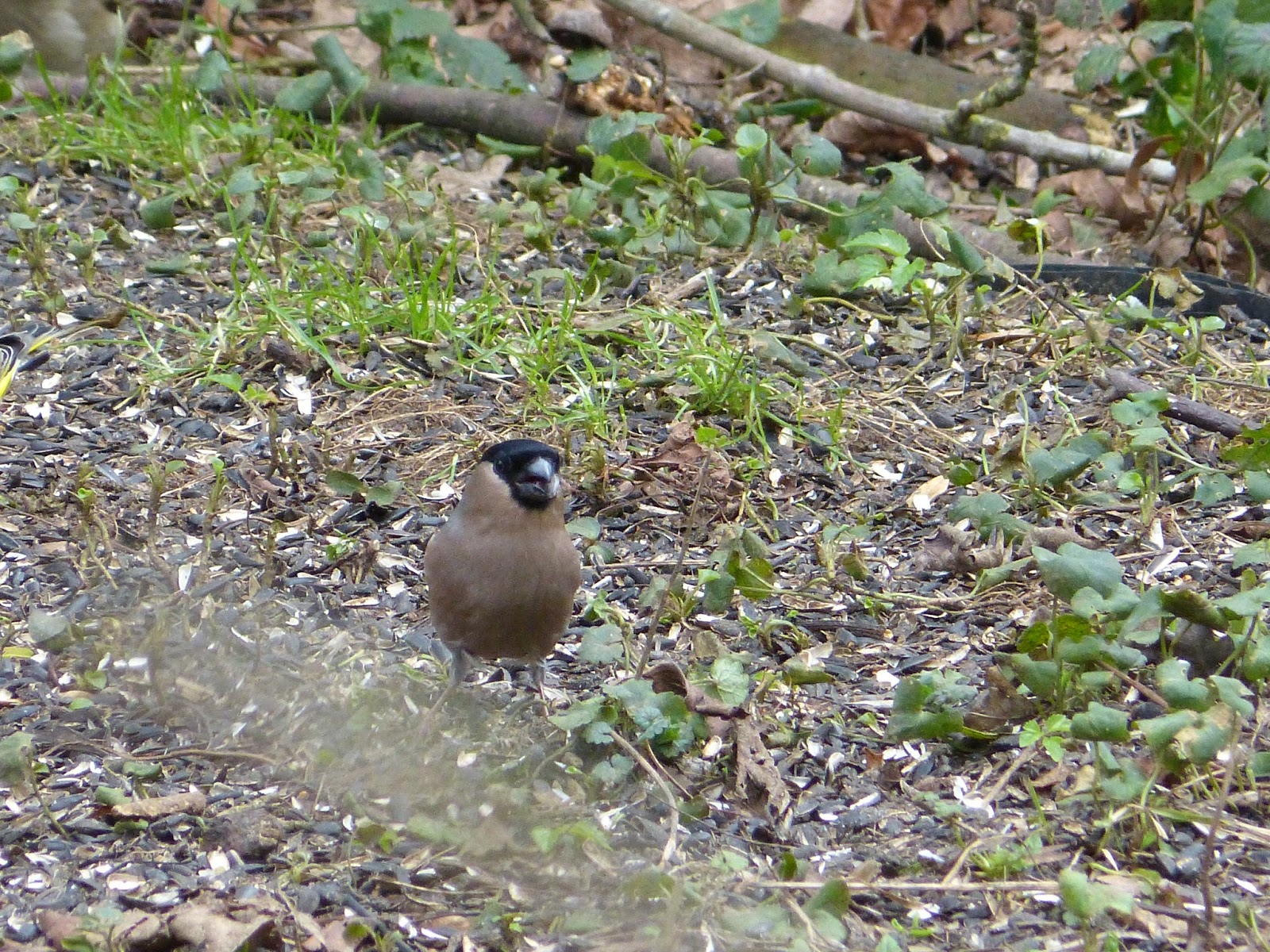
The new elevated hide in the reserve gave beautiful close up views of these rosey-pink socialites and a tree creeper amid their chattering and the flocks of gold finches. We also had long distance views of gliding marsh harriers quartering the reed beds below. At the Fen hide we found a little grebe nestled among a quartet of mallards. A male bullfinch took over one of the feeders and bullied other birds away, claiming the seeds for himself.
Another wonderful visit to this reserve. Hopefully we'll not have to wait another 6 months before we visit again!
Subscribe to:
Posts (Atom)