Showing posts with label #Sculthorpe. Show all posts

Wednesday, April 5, 2017

7. Sculthorpe Moor

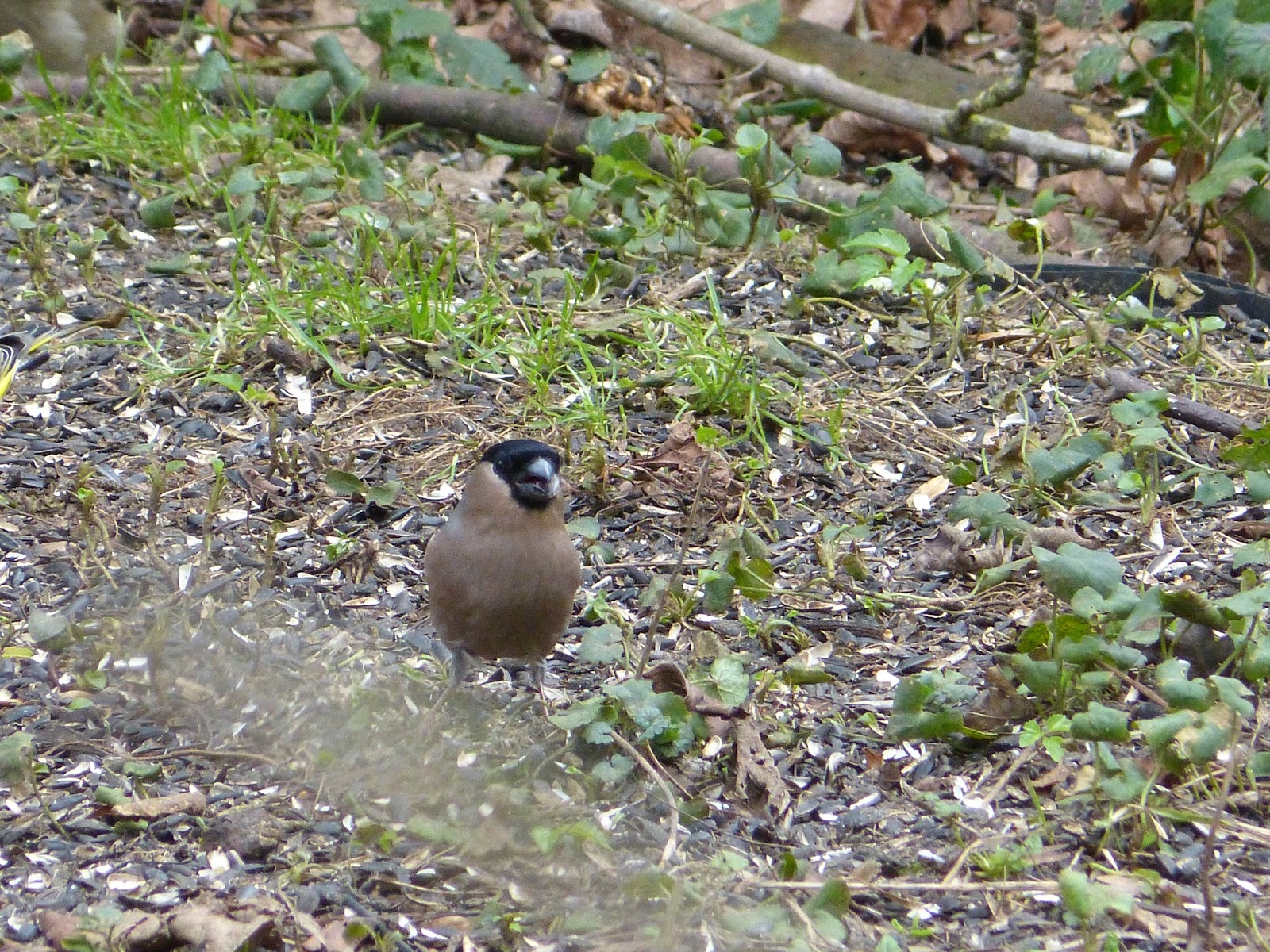
A gloriously bright day, feeling truly like spring, with chiff chaffs calling from every bush and tree, or at least that’s how it felt. Their humble song, announcing their name, whilst mostly staying hidden amongst twigs, new leaves and catkins, accompanied us on our walk from reception to the reserve entrance. A viewing panel overlooking long feeders was our first stop. Drawing back the shutters, we were greeted by a male bullfinch in full colour, his deep red feathers shining out like a jewel from the feeding station.

M. bullfinch
F. reed bunting

Following the boardwalk, through the woodland and over ‘watervole bridge’, although we saw no water voles, a pair of marsh tits alighted in a low tree, their completely black caps contrasting with the brightness of the day. When we arrived at the woodland hide, at first, all was quiet, with little to be seen or heard. A pair of muntjac deer skulked along the shadows, occasionally dashing through sunlit patches, dining on new shoots and leaves. Chaffinches, both male and female, began to descend, balancing on feeder perches and gathering on the floor below. A female reed bunting joined in, flitting from tree to ground and back again, her yellow and chocolate brown stripes seemingly out of place in the woodland. A pair of green finches dined, serenaded by the fluting and slightly scratchy song of a male black cap.

Leaving the woodland hide and continuing on the boardwalk towards fen hide, a commotion began above us. A pair of very agitated great tits shouting at a pair of nuthatches paying too much attention to a particular nest box; they continued their harsh calls until well after the nuthatches had flown. Perhaps a war over a as yet unoccupied box? Or the nuthatches trying to invade?

Fen hide was bathed in sharp sunlight, reflecting prettily off the ripples made by the little grebes, mallards and coots. The little grebes had a small nest right in front of the hide, almost invisible until they shifted vegetation, exposing a clutch of eggs, then carefully covering them over again before heading back out to forage. A pair of doves and a selection of male reed buntings had ownership of one bird table, whilst the other was swarming with more reed buntings and bramblings, with the occasional visit by a long tailed tit, bullfinch or nuthatch.


M. reed bunting
Little grebe

The newest hide at the reserve is the tower hide, built so as to be level with the canopy. Here, we had amazing views of the small birds brave enough to alight on platforms close to the hide windows. Today, a brambling was one of them, as well as an acrobatic long tailed tit, who would steal a morsel of food, hang from a twig with one claw whilst gripping the morsel in the other and feeding from it. A red poll, less brave, but no less attractive, sat on a niger seed feeder slightly further away.

Brambling
Red poll
Long tailed tit
Peacock butterfly

We continued, walking along the boardwalk bathed in sunlight, towards the scrape hides, where, unfortunately, there was nothing to be seen, but a green woodpecker could be heard yaffling from nearby. The warm day had tempted out a few different butterflies; an orange-tip gliding along the path edges and peacock butterflies basking on the boardwalk or chasing each other in spirals.


A day to herald the arrival of spring.

Tuesday, February 16, 2016

Valentines Day at Sculthorpe

It was a brisk morning on Sunday, but that didn't stop us getting some wildlife into our 'Valentine's Day'! It also didn't stop the wildlife from putting on a show, we had some great views of a variety of bird species. Unfortunately, my photos do not do our views justice!

The viewing panel looking over a variety of feeders near the information boards at the very start of the boardwalk is usually where we see the biggest variety of bird species, but there were fewer here today. There were a few blue, coal and great tits flitting to and fro, but that was the limit for this morning. Things got much more exciting after we arrived at the woodland hide.

Walking along the boardwalk we were somewhat sheltered from the cool wind, which may have explained the absence of a number of birds at our previous stop. Walking the woodland loop, we spotted a male siskin dining on nyger seeds strung high up in the trees. On reaching the woodland hide we were greeted with views of numerous chaffinches, greenfinches and tits. After around five minutes, everything in sight scattered. We knew there had to be something predatory around. It was at this point that a few other visitors entered the hide and we had to explain why we were looking so intently at a landscape devoid of birds. Suddenly a dark brown, arrow-like shape scythed into view and through the trees, causing all of the hidden smaller birds to flee to new shelter. A sparrowhawk. It deftly avoided branches and flew through gaps which appeared far too small. After several attempts, the hunter gave up and carried on across the surrounding fields. As soon as the finches and tits decided the coast was clear, they returned in force, calling loudly. The great tits were the first to venture forth into the open and onto the feeders, soon followed by the blue and long tailed tits. The long tailed tits were a pair chatting to each other, in calls I wouldn't normally associate with this species, in the short shrubs directly in front of the hide. It didn't take long for a pair of bullfinches to join in either. They began to defend their feeding perches from other birds. As the other birds began to disappear, a brambling timidly entered the scene and kept well hidden amongst the small leaves and branches.

The walk along the boardwalk was quiet in terms of what we could see, but birds could be heard around us. There was little to be seen at the Fen hide, but the new tower hide had some wonderful birds feeding outside the shutters looking over the woodland. A new bird for us was a lesser redpoll that joined a charm of goldfinches on one of the long feeders. A subtly beautiful little bird. A marsh tit also joined the feast. However, this hide was busy, so once we'd had a good view, we left and marched quickly back to the car in an attempt to warm up!


Sunday, November 29, 2015

November at Sculthorpe


Sculthorpe Moor - 15th November

Apologies for not writing for over a month! November has been a busy one, but we did manage a couple of wildlife watching sessions. We have finally made it back to Sculthorpe Moor; this small site run by the Hawk and Owl Trust really is a hidden treasure. We haven't been here since spring and this return visit certainly wasn't a disappointment. The winds we have had throughout November made the trees talk and sing and with it, the bird life joined in.

On first entering the reserve, there is a viewing panel overlooking a range of birdfeeders. They were alive with green finches, chaffinches, great tits, blue tits, coal and marsh tits, a nuthatch and some beautiful bramblings on the feeders and on the floor below. 


Walking around the reserve, it wasn't just the bird hides that yeilded fantastic views of wildlife. On niger seed feeders suspended from trees were dozens of gold finches in dazzling colours. In trees above were mixed flocks of siskins tweezering out seeds and chattering away to each other with goldfinches trying to join in the conversation. There seemed to be long tailed tits everywhere, one of my favourite bird species, always sociable and 'friendly' in their large gangs, filling the air with their 'see-see-see's. 


The new elevated hide in the reserve gave beautiful close up views of these rosey-pink socialites and a tree creeper amid their chattering and the flocks of gold finches. We also had long distance views of gliding marsh harriers quartering the reed beds below. At the Fen hide we found a little grebe nestled among a quartet of mallards. A male bullfinch took over one of the feeders and bullied other birds away, claiming the seeds for himself. 

Another wonderful visit to this reserve. Hopefully we'll not have to wait another 6 months before we visit again!

Sunday, May 3, 2015

Ecologists reunion at Sculthorpe Moor

Well, a small reunion of five university friends, a mixture of ecologists and environmental scientists; although we were complimented by being asked a number of times if we were all students, despite us all graduating four to five years ago.

Only my second visit to the reserve, and the first for everyone else, we were again spoiled for the abundance and diversity of wildlife we saw. To start off our afternoon, there was a mistle thrush in the trees surrounding the car park, the first I have spotted in a very long time. The three of us who travelled in the first car stood in the car park and absorbed the surrounding birdsong until the second car arrived.

The air was cool and the sky patchy as we walked along the dusty track to the reserve entrance and the first viewing panel. This was the most fruitful location for birds on our first visit here; I was disappointed at the emptiness of the space when we arrived this time. However, we were soon treated to a range of avian visitors, as were we at the Frank Jarvis (Woodland Hide); a proud mother mallard with four ducklings; marsh, coal, blue, great and long tailed tits; treecreepers, nuthatches, green- and chaffinches.


Crossing the bridge from dry wood to wet wood, a collection of other visitors were watching a hole in the river bank. Finding it unlikely to be a water vole as the hole seemed far too small, we stood, watched and waited until a whisp of brown fur pelted up the bank and into the hole, then back again, slipping silently into the water of the dyke. We watched the exploits of this water shrew until it disappeared into a different hole and out onto the bank into the mid-length grasses. The first water shrew I've knowingly seen, we saw another preening itself on the bank of dry wood / fen near the dyke viewing platform; small, fluffy and unquestionably cute, this too slid noiselessly into the water and disappeared.

Along the edges of the boardwalk, one friend was constantly excited by the invertebrates she was coming across and photographing, but my excitement was for the first Odonata I've seen this year: a large red damselfly. From her colourings; very dark abdominal segments and yellow antehumeral stripes, I would guess at a female of the melanotum colour form. Another highlight of the walk to the Fen hide was the 'mole fortress', a treasure that I had no idea even existed. Apparently, a large structured molehill which allows the mole to escape wet conditions when on land liable to flooding, the elevated 'fortress' gives the mole a high, dry and safe refuge.


From the Whitley (Fen) hide, we were treated to a pair of nuthatches foraging; reed buntings; three bullfinches (one male, two females); majestic circling marsh harriers, which we later found out were prospecting nest sites, causing the path to the scrape hides to be closed, and a buzzard which allowed us several flybys. A tour had finished here too, they told us that they had seen a cuckoo and a red kite, which unfortunately we had not, but it's good to know they're there.


The more I visit this reserve, the more I fall in love with it. Friendly volunteers around the park to point out species and help with i.d., wildlife all over the place, from the 'common' to the obscure and a beautiful habitat. What more could I ask for?

Sunday, March 8, 2015

Sculthorpe Moor Community Nature Reserve

Mixed flock of bramblings and chaffinches
We visited a new place today, thanks to several suggestions: Sculthorpe Moor Nature Reserve, run by the Hawk and Owl Trust.

It was unbelievable; within our first five minutes, at the viewing panel closest to the entrance, we had seen bramblings (my first ever - and five of them altogether!), bullfinches (both male and female), a water rail, a great spotted woodpecker, a nuthatch and more greenfinches and chaffinches than I had ever seen in one place before. It was heard to tear ourselves away from such an interesting gathering, but after a good length of time, and several conversations with other birders about what we'd missed elsewhere, we decided to explore the rest of this magical little wildlife haven.

Water rail
We made our way along the boardwalk, starting with the woodland loop which leads to the first hide. On our way to the woodland hide, I became distracted by rustling in the dry leaf litter and a fast, well camouflaged shape shooting from one tree to another, almost faster than we were able to keep up. Patience paid off here, we watched and waited and eventually were graced with good and quite close up views of a weasel (I think... it lacked an obvious black tail, you can see a video of it here). This was a real treat, I've only ever had fleeting glimpses of these small mustelids before.


Weasel?
The woodland hide gave us stunning views of another great spotted woodpecker, as well as huge densities of chaffinch and greenfinch and a few blue-, coal- and long tailed tits. We left the hide to the cheerful song of a wren part way up the closest tree, and continued through the woodland to eventually reach the Whitley (Fen) hide. Here, we saw more bullfinches as well as a reed bunting and many more chaffinches. Finally, we headed to the scrape, but unfortunately saw nothing from the hide here. However, on the walk to these hides, there was a sudden explosion of small birds from the Fen hide which flew over the pathway; they had been spooked by the kestrel circling overhead; a perfect silhouette against the bright sky. Luckily, it didn't spook another treat for us as we re-entered the woodland; a marsh tit and a tree creeper both making their way up the bark on the same tree.

Common frog
Our final reward of the day was provided by one of the friendly volunteers at the reserve who pointed out scarlet elf cap fungi that was evident either side of the board walk, then took us to the likely location of a nuthatch nest. They had nested in this particular hole last year and had been seen this morning inspecting it again. On our way out of the restricted area, we also saw our first common frog of the year! Looks like spring has arrived!

It's always lovely to discover new places to explore through like minded people, but even better when it turns out that the new place is as full of wildlife as this small reserve seems to be. We'll definitely be making this a more visited area of our 'local patch' of Norfolk!

Nuthatch

Coal tit

Great spotted woodpecker

Male bullfinch