Showing posts with label #wildlife. Show all posts

Sunday, November 4, 2018

18. RSPB Minsmere


Reeds rustling in the November wind, their purple-grey seed heads shimmering in the low sun, waving to the rhythm of the breeze greeted us at RSPB Minsmere. Small birds kept a low profile, sheltering, and Bittern Hide appeared lifeless in a beautiful panorama of golden light and reflection. The unseasonably warm day brought common darters out to sunbathe on wooden benches and swarm together over the land, the last of their dragonfly-kind on the wing this year; they paved our way to Island Mere Hide.

This hide was alive with birds and human visitors alike. Over the bright water, swans paddled, whilst marsh harriers danced in the distance. A bittern, overly confiding and confident, appeared straight in front of the hide. These usually elusive birds I usually only glimpse through dense reeds, or hear their booming calls in spring, but this was something else entirely. The piercing yellow eye and beautiful golden-brown-black-white barred plumage, perfectly echoing the dancing reeds behind, demonstrating cryptic colouration working flawlessly for this little heron.

In contrast, the Canopy Hide gave us only trees for company, although their chorus was beautiful to listen to and their changing colours and tumbling leaves were a feast for the eyes in themselves. Although our avian friends seemed to be avoiding the tree tops, lower in the canopy we stumbled across a mixed flock of chatty little birds; blue-, great- and long tailed tits called and hunted for insects in a little gang, one in particular being very successful at finding moths on the bark. A rabbit with tatty ears feasted on fallen blackberries on the ground, whilst squirrels continued on their never-ending mission of finding and caching their winter stores.

The sea, high and rippled with waves that never seemed to reach the shore, was brisk, with the dunes providing us with some shelter as we battled with sand to reach the East Hide. A stone chat, characteristically perching on the tips of small twigs, accompanied us as the light began to drain from the sky at mid-afternoon. Teal, wigeon, shoveler, shelduck, gadwall and other wildfowl huddled down on the little islands, others preening or fighting out on the water. Similar critters could be found at South Hide, with a particularly stunning shoveler showing off his iridescent green head and neck smothered in water droplets from his dabbling.


Monday, August 20, 2018

A Dragonfly and Butterfly Safari at Strumpshaw Fen

It was a mild, cloudy and windy day; nothing like the scorching, calm weather we’ve gotten used to, so we weren’t overly optimistic about how many of our spectacular aerial display masters we would find on our dragonfly and butterfly safari at RSPB Strumpshaw Fen. Luckily, the cooler weather meant the smaller species were less quick on the wing so Andy from Butterfly Conservation Norfolk, who was leading the walk, was able to quickly net a common blue damselfly less than five minutes in to point out the identifying features. I’ve always loved dragonflies, but I’m still getting to grips with identification techniques, so this was extremely useful, especially for the tricky-to-tell-apart blues. The common has a dot on ‘S2’, the second abdominal segment, whereas an azure, which we didn’t find, has a U-shape. Our next find was a holly blue butterfly enjoying some bramble flowers, unfussed by the small group of interested naturalists keenly watching it crawl.

Common blue damselfly
Holly blue butterfly
This was shortly followed by a willow emerald damselfly, our next catch, even more beautiful up close, this damselfly is a relatively recent colonist here and has spread incredibly quickly.

Willow emerald damselfly
Ruddy darters kept themselves out of reach, perching on tall sticks or staying out over the water to prevent us sneaking up on them. Andy did manage to catch one later, however, to point out its characteristics. More keenly ‘waisted’ than a common darter; this was obvious when in the hand as an identifying feature of this species rather than just going by colour.

Ruddy darter
Southern hawkers I’ve always thought of as an impressive and curious dragonfly, but the female that was netted really impressed. Not at all happy with being caught, she valiantly tried to gnaw her way free, showing the movement in her jaw as she tried to pierce the skin. Up close, this is clearly a robust dragonfly with strong flight muscles and beautiful eyes.

Female Southern hawker
A pretty emerald damselfly was our next catch, really unimpressed with being caught, he curled his abdomen over his back in an attempt to tell us to leave him alone.

Emerald damselfly
Spotting a brown hawker that was far too high to even attempt to reach and several migrant hawkers running rings around us brought our dragonfly total to seven for the afternoon. However, the show wasn’t quite over yet. For a finale, Andy spotted a male southern hawker in the hedge and managed to catch it to show us the colour variation between male and female. This individual had beautiful green-blue eyes and an ‘expression’ that seemed to show how angry it was at being caught.

Male Southern hawker
For anyone interested in dragonflies, I would highly recommend this event – the next is in June 2019. 

Saturday, August 4, 2018

17. SWT Carlton Marshes


Brought to my attention via social media when the American bittern made a visit to this reserve, we finally decided to pay it a visit ourselves. On a day with weather that has become commonplace this summer, with glaring sunshine and a temperature of around 30°, we walked the full trail around Carlton Marshes. A stunning landscape, somehow even flatter and with even more views of the horizon than similar reserves in Norfolk. We primarily visited for dragonflies, with plenty of brown hawkers on the wing and a few emerald damselflies, and I was pleased to find my first small red-eyed damselflies, their eyes almost glowing demonically from their turquoise and metallic brown bodies. Males mate-guarded, clasped fast to the females as they oviposited and a female brown hawker joined in, submersing most of her long abdomen to lay her large eggs into underwater plant material.

Emerald damselfly
Small red-eyed damselflies
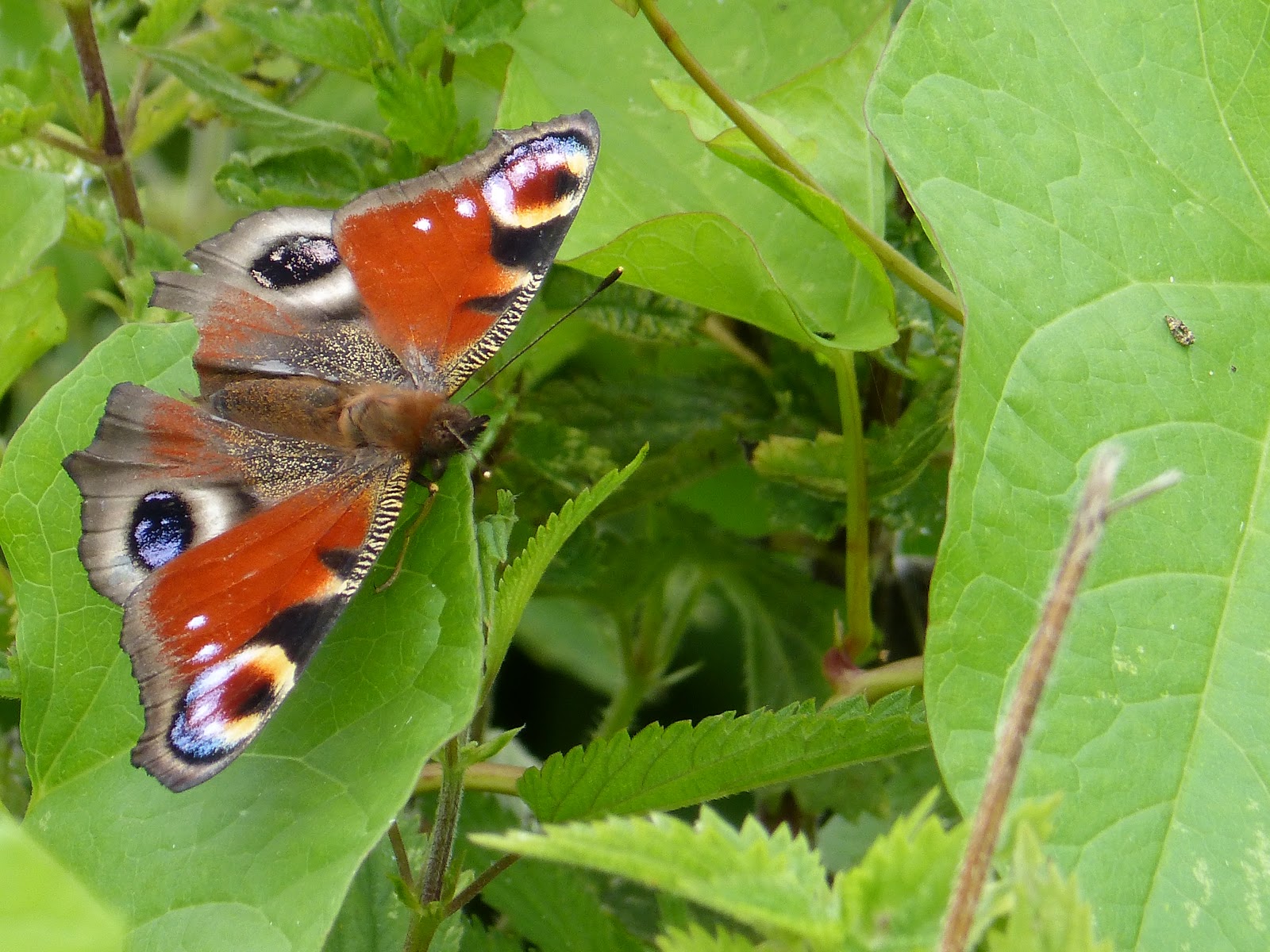
Plenty of butterflies were enjoying the Sun too, with bright and fresh red admirals accompanied by other slightly more worn individuals. Gatekeepers and meadow browns fluttered along the waterside vegetation, accompanied by plenty of whites. A peacock butterfly, having seen better days, rested for a while and I had to avoid treading on a skipper.

Any small birds remained quiet, but a number of raptors obliged. A common buzzard soared on thermals, whilst a daring kestrel held its ground on a post until the last second as we approached. As we watched the kestrel, a marsh harrier glided low overhead, showing off its blackened wing tips and pale head as it turned.


Tuesday, July 24, 2018

A summer walk at Strumpshaw Fen


There were plenty of majestic dragons and fluttering damsels at a very muggy Strumpshaw Fen on Sunday. Newly emerged dragons lifted from the meadow trail as we walked, their fresh and filmy wings glistening in the harsh sunlight, mostly darters that were not yet developed enough (for me) to identify. Common and ruddy darters appeared and just as quickly disappeared, whilst brown hawkers patrolled, hunted and buzzed at us when we lingered too long. Common and blue tailed damselflies alighted on upright stems off the paths and waterways and a Southern hawker eventually obliged by settling on dead leaves, possibly trying to blend in. Black tailed skimmers always kept a step ahead of us on the paths near fen hide, settling again and lifting off as we approached, rarely realising we would just keep getting closer again.

Black-tailed skimmer
Southern hawker

Vivid butterflies were also out in force, some dark mysteries until opening their wings. Peacocks and red admirals littered the waterside brambles, contrasting with the green foliage. Small and other ‘whites’ were everywhere, like large petals of blossom alighting, then being blown by a spring breeze. The odd small tortoiseshell and speckled wood settled and showed off. Never before had I noticed how furry speckled woods are, usually they are moving too quickly through dappled woodland, chasing their competitors or potential mates.


Red admiral
Peacock
Small tortoiseshell
Speckled wood

The birds were mostly quiet, with most now being in eclipse. An obliging kingfisher at Fen Hide decided to show off with a long bath and preening session as we watched, in little hurry. Here, a little egret also danced whilst trying to spear fish. Tower hide held a handful of ducks, young and begging black headed gulls and a couple of moulting ruff. There was no sign of the reported great white egrets from the previous day. However, the dragonflies and butterflies certainly made up for it – I’m now looking forward to their butterfly and dragonfly safari next month!

Sunday, February 4, 2018

14. UEA Broads & River Yare


I often think that we don’t explore this area enough. Within walking distance of our house, we really should take advantage of this wildlife rich area more often. Awake early on a Sunday morning, we took advantage of the (seemingly) bright and brisk weather, and went for a muddy stomp around the UEA broad, a body of water created by quarrying for university building material in the 1970s, working our way back into Eaton along the River Yare.

We started in the woodland ‘behind’ the broad, past the ‘rabbit enclosure’ (a small conservation area used for ecological research) and over the bridge to meet the oncoming onslaught of cold rain and hail. The three great crested grebes, gulls and cormorants seemed a lot less bothered by this sudden downpour than we were. As the sunshine broke back through, we met the boardwalk that borders the River Yare. As we turned, we watched a wren bathe in a shallow pool to the tune of a singing robin. Two kingfishers whistled past us, flashes of orange and blue, one giving chase to the other. Stopping and waiting to see if they would return, we could hear blue and great tits in the trees, watching them nibble at pinky-purple catkins overhanging the mirror of water. My knowledge of tree species is shamefully poor, but I think these may have been alder…

Continuing until the boardwalk became the very muddy path to continue following the river, we were suddenly aware of two bright yellow birds watching us; a pair of siskin, the first I have seen in this area, chatting to each other and quickly flitting out of view. We slipped and slid our way along the river bank, encountering a mute swan using the current to its advantage and putting our slow progress to shame. Eventually, we caught up with her whilst she spruced up her already pristine coat of snowy feathers.

There is an area of land, where, last year, a number of trees were felled, chopped and left as dead wood. Here, a wren played hide and seek with us, searching its way into every nook and cranny in the tangled mess of wood. Here, we also found an excellent ‘bird tree’, with a host of woodland bird species. Watching blue tits and listening to the ‘teacher teacher’ of a great tit, I was suddenly aware of a small brown bird working its way up the bark, a tree creeper. Just when I thought I had spotted another, I realised from the high pitched call and (through the bins) a fiery head, that a goldcrest had joined the fray. This was quickly followed by a pair of nuthatch and a small team of long tailed tits all foraging in the branches.

For whatever reason, that particular tree seemed a great place for all of these woodland birds and I have marked it on my mental map to return to throughout the year.

Monday, January 1, 2018

12. RSPB Buckenham Marshes

A soggy start to New Years Eve I thought may have doused our plans for wildlife watching. Happily, I was wrong, and once the day had brightened, we headed out to RSPB Buckenham Marshes.

At first, all seemed quiet, with just a few dabbling mute swans and moorhens picking at the wind swept grass. But, as we ventured further, the unmistakable sound of whistling wigeon and the contented honks of conversational greylags reached our ears.

High above, a marsh harrier flapped lazily, not in the mood for hunting. Below, on the marsh, a desert of lapwings showed off their chunky wings, setting off small murmurations of starlings. Each unsettled the other, building tension. At the other end, all was calm with some sleepy wigeon and resting swans, but, as we turned, the sky was full of drama; there were too many things to grab at our attention.

To our left and right, were the incoming formations of greylag geese ready to join their kin on the marsh for the evening. Ahead, were the dark specks of what looked like inverted snow, but were actually a mixed flock of corvids making their way in for their roosting spectacular. To our left was what was building to be a huge starling murumuration; moving as one dark and mysterious superorganism against the sky.


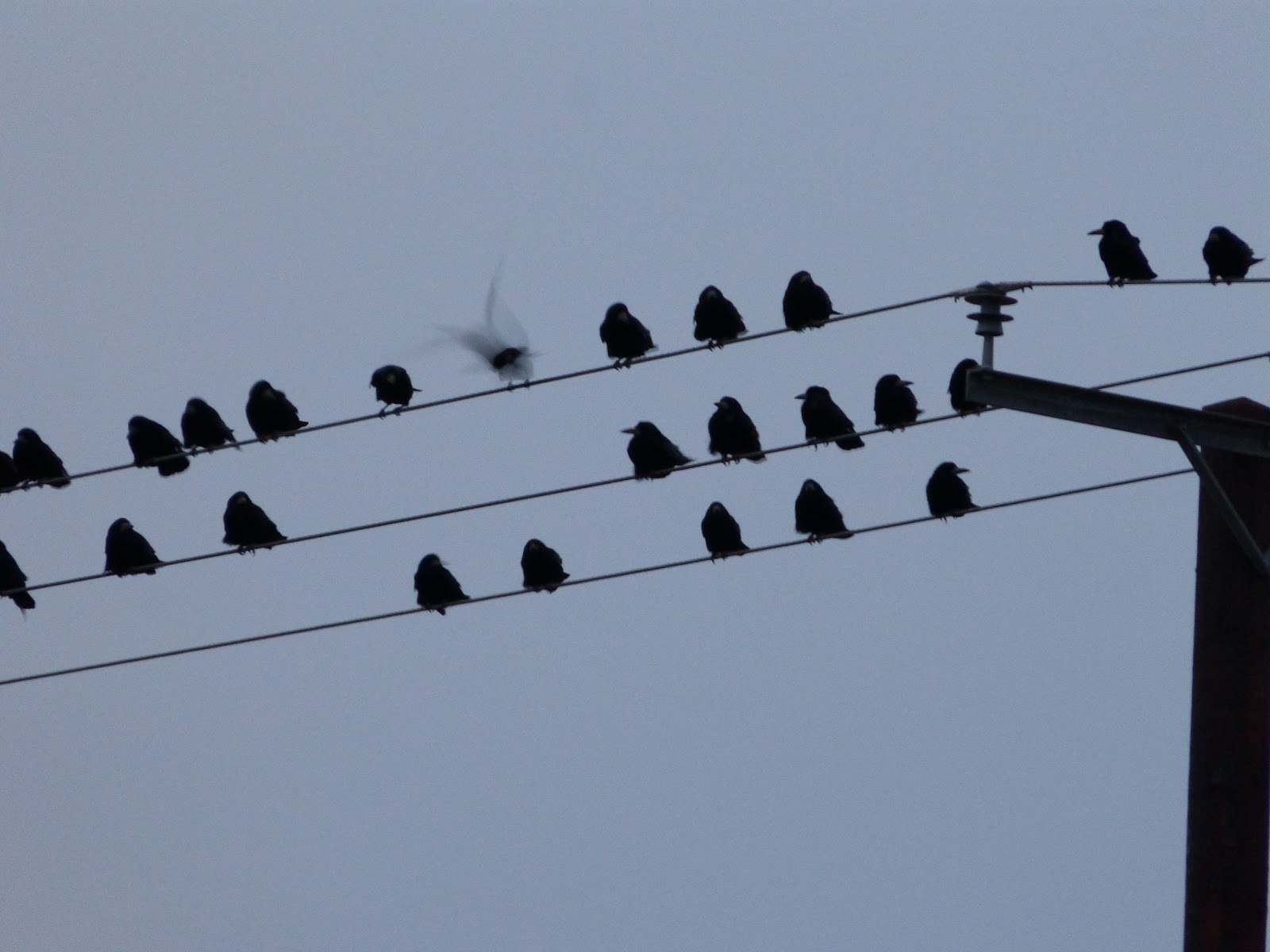
The numbers of rooks and jackdaws swelled as they coalesced in a huge mushroom shaped stand of trees, weighing down it's uppermost branches with their dark forms. Others aggregated on telephone wires before joining the host tree, each new set of arrivals aggravating those already there. When some unknown critical mass was reached, all took off as one, visibly darkening the sky as they headed for the roost site.


What an unforgettable way to end 2017!


Thursday, September 7, 2017

11. RSPB Titchwell Marsh

As our walk at RSPB Snettisham was so early, we decided to continue round the coast to RSPB Titchwell Marsh. Two RSPB reserves in one day – perfect!

Ruff
A weasel greeted us at this reserve; as soon as we began along the West bank path, it darted across. After that, it really was waders galore at Titchwell: ruff, lapwing, black tailed godwit, redshank, avocets… the list could go on, were all abundant in the freshwater marsh, visible from the path and the Island hide. All foraging in the various ways that their unique bills allow or dozing in the afternoon sunshine. A friendly fellow-birder pointed out a pair of marsh harriers quartering over the surrounding land. However, the beach is where I spotted some of my favourite waders.


I’ve always had a soft spot for oystercatchers and a small group of these black, white and orange jokers made sure we were fully entertained – chasing each other and calling, beaks vertically down and backs reared. Among this chaos, other oystercatchers foraged sensibly and a trio of cute little sanderling dozed (or tried to). Turnstones did what their name suggests, picking their way around the other birds. Godwits with their oversized bills probed the sand, as did the even larger and more curious curlew, who’s haunting call was the leading voice to the backing vocals of the sea. Further out, a lesser black-backed gull bobbed on the small waves.

Sanderling
Curlew

Returning along the same path, then taking the Fen trail led us to some signs of autumn. Looking out from Fen hide, a raft of wigeon floated along, with the occasional whistle. September feels too early for these winter migrants to appear, but I guess they have to start some time.

Sunday, September 3, 2017

10. RSPB Snettisham

Bright and hazy early morning sunshine warming the still lazy dragonflies and glinting off the electric blue dash of a Kingfisher’s back is how our morning at RSPB Snettisham started. I hadn’t been up this early since the start of the summer and hearing bird song from those oh-so-silent day time summer songsters was wonderful.

The access trail leading from the car park to the beach was full of blackberries. A migrant hawker dragonfly, just warm enough to fly, but not so much that it escaped us, alighted on a bramble to soak up the strengthening rays. Beautiful wildflowers littered the edges, with the dainty harebells showing off the most. Flashes off colour darted before our eyes; speckled wood, tortoiseshell and small white butterflies painted the scene. Wrens and other small birds were calling from the vegetation, but few wanted to be seen.


Eventually reaching the beach trail, we were met with views of the mudflats that stretched almost to the horizon. At first glance, they appeared to just contain huge flocks of black headed gulls, but on closer examination, were also full of small brown blobs with legs and beaks. Dunlin were foraging in a large group, while the odd curlew, redshank and little egret danced around the small pools.

The beach trail was full of small birds; they clearly favoured a branch that great tits, long tailed tits and whitethroats were squabbling over in a small hawthorn. This led us to the loop trail and the rotary hide, looking out onto one of the pits. Here, were huge aggregations of greylag geese, cormorants and black tailed godwits, all on their own little islands. Common terns preened on posts and brought fish across from the wash. The occasional carrion crow, unlucky enough to pester them, was mobbed by terns and gulls.


Back out on the loop, flocks of starlings descended into the pits and terns flew overhead, noisily bringing in their silver catches. Something caused a stir among the gulls out on the mudflats, causing them all to take flight, circle and land. House martins and swallows swooped and dived, feasting off the abundant insect life above the water. Common darters, showing off in their red-orange garb, teased us by landing in front of our feet, taking to the air at the last second.

A beautiful morning for a beautiful walk, but next time, we’ll get our dates right for the Snettisham spectacular!

Sunday, August 27, 2017

9. Ted Ellis Nature Reserve, Surlingham

A russet brown coat glistening in the sunshine and tail aloft with the fire of summer, an apparition guided our way along the path to the nature reserve entrance. Our first visit to this reserve, and what better way to start the journey than with a stoat sighting. The Ted Ellis Trust was founded to preserve Wheatfen which, as the visitors guide states, “is one of the few remaining areas of the once extensive Yare Valley swamp” and is a SSSI. It’s not quite like any of the other reserves we have visited, with a mixture of habitats and a diverse array of insect life, and, I would imagine, bird life at any other time of year.

I don’t expect to see or hear many birds in August and walks can seem eerily quiet at times. The summer silence was broken today by the half-call of a cetti’s warbler, the explosion of a woodpigeon from a tree, or the gentle dabbling of a family of mute swans. A pair of buzzards circled silently and lazily over the summer-bleached fenland. The only other sounds were those of rodents rustling in the undergrowth, the buzz of bees or the flit of dragonfly wings as they deftly avoided a face-on collision.


Dragonflies and butterflies were the stars of the show today. Speckled woods darted through the woodland, unusually fast and direct flights for a member of the Lepidoptera. Peacocks sunned themselves along the board walk and a single brimstone nectared on the beautiful purple flower spikes bordering the water. Many members of the Odonata order were on the wing today, taking advantage of the blazing sunshine and warmth to show off their aerial acrobatics to the full. Brown hawkers patrolled their territories, often flying low along the paths in front of us. Southern hawkers, dressed in their bright disco colours alighted on leaves momentarily before resuming their hunting. Common and ruddy darters basked in the sunshine, or couple up in-copu. Willow emeralds were in a similarly amorous mood, with more in tandem pairs than singletons (this adds to my list of dragonfly species spotted this year, bringing the current total up to 15). They were everywhere along the latter parts of the walk.

Brimstone
Ruddy darter
Common darters
Common darters
Willow emerald damselflies

We tried to explore as much of the reserve as possible and ended it with a dash through Surlingham Wood to avoid the mosquitoes (not altogether successfully). A beautiful reserve that we will definitely be visiting again.

Thursday, August 17, 2017

Dragonflies 2017

I've always had a bit of an obsession with dragonflies. Their speed and agility, their gracefulness and curiosity has always fascinated me. But, it is has only been over the past couple of years that I have truly started to learn to identify them. I've seen more diversity of species this year than I think I ever have before, and I haven't had the time to write blogs about all the reserves I've been to. So, here is a photographic summary of the species I've got fairly good photos of this year. I've included a written list at the bottom of other species I have seen this year, but not managed to photograph well.

I am still learning to identify them, so if you think I have made a mistake, please let me know. Thanks to @BDSdragonflies for their help in identifying species knew to me.

May / June 2017, RSPB Strumpshaw Fen:

Large red damselfly
Common blue damselfly
Blue tailed damselfly

Banded demoiselle
Broad bodied chaser
Scarce chaser
Hairy dragonfly

Black tailed skimmer

August 2017, Upton Broad:

Ruddy darter
Emerald damselfy


August 2017, Home:

Migrant hawker

Other species I've seen this year:
Common darter
Brown hawker
Southern hawker

That makes 14 different species I have knowingly seen and identified this year. Let's hope there's more to come!