Showing posts with label #greenfinch. Show all posts

Wednesday, April 5, 2017

7. Sculthorpe Moor

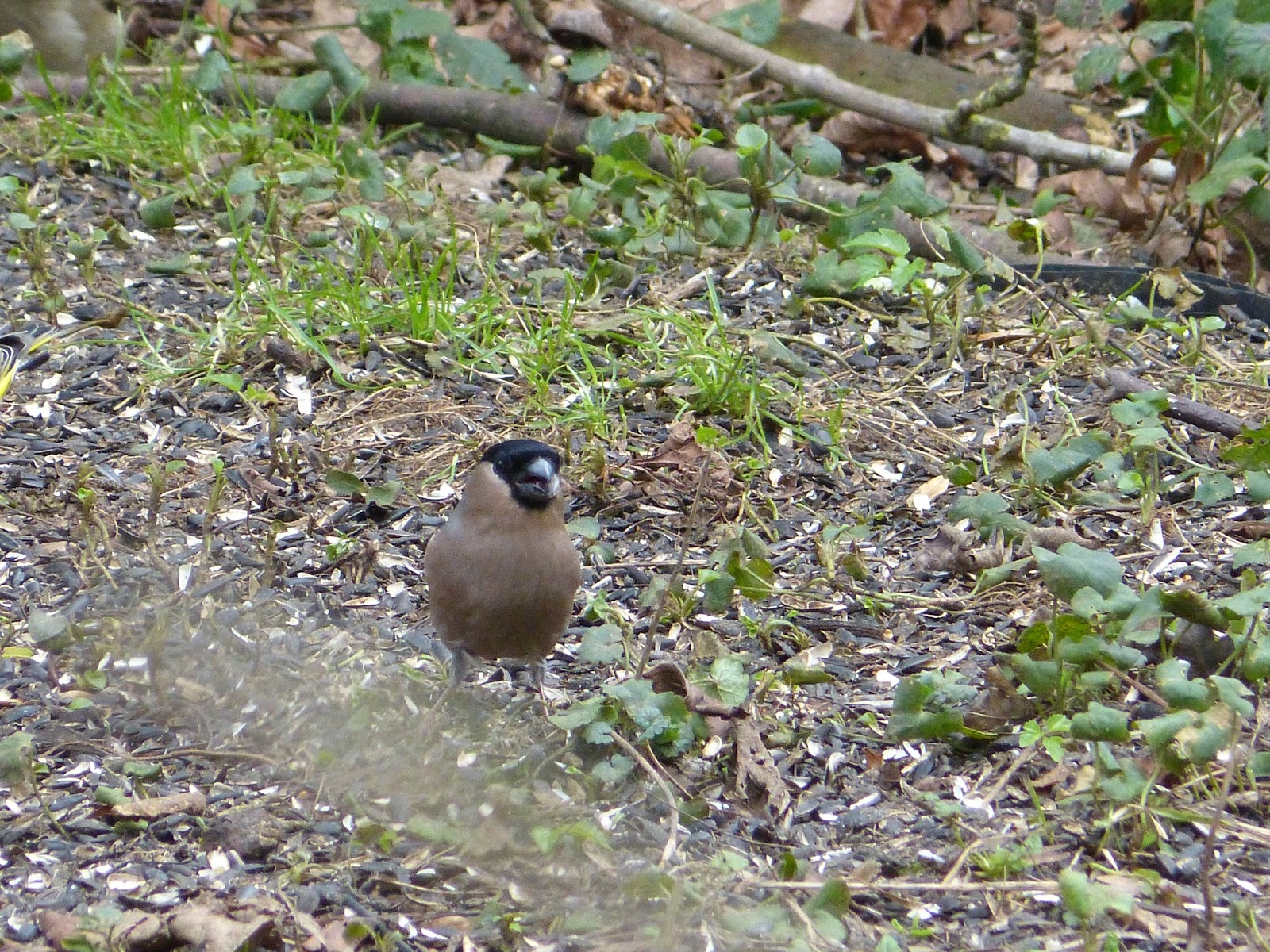
A gloriously bright day, feeling truly like spring, with chiff chaffs calling from every bush and tree, or at least that’s how it felt. Their humble song, announcing their name, whilst mostly staying hidden amongst twigs, new leaves and catkins, accompanied us on our walk from reception to the reserve entrance. A viewing panel overlooking long feeders was our first stop. Drawing back the shutters, we were greeted by a male bullfinch in full colour, his deep red feathers shining out like a jewel from the feeding station.

M. bullfinch
F. reed bunting

Following the boardwalk, through the woodland and over ‘watervole bridge’, although we saw no water voles, a pair of marsh tits alighted in a low tree, their completely black caps contrasting with the brightness of the day. When we arrived at the woodland hide, at first, all was quiet, with little to be seen or heard. A pair of muntjac deer skulked along the shadows, occasionally dashing through sunlit patches, dining on new shoots and leaves. Chaffinches, both male and female, began to descend, balancing on feeder perches and gathering on the floor below. A female reed bunting joined in, flitting from tree to ground and back again, her yellow and chocolate brown stripes seemingly out of place in the woodland. A pair of green finches dined, serenaded by the fluting and slightly scratchy song of a male black cap.

Leaving the woodland hide and continuing on the boardwalk towards fen hide, a commotion began above us. A pair of very agitated great tits shouting at a pair of nuthatches paying too much attention to a particular nest box; they continued their harsh calls until well after the nuthatches had flown. Perhaps a war over a as yet unoccupied box? Or the nuthatches trying to invade?

Fen hide was bathed in sharp sunlight, reflecting prettily off the ripples made by the little grebes, mallards and coots. The little grebes had a small nest right in front of the hide, almost invisible until they shifted vegetation, exposing a clutch of eggs, then carefully covering them over again before heading back out to forage. A pair of doves and a selection of male reed buntings had ownership of one bird table, whilst the other was swarming with more reed buntings and bramblings, with the occasional visit by a long tailed tit, bullfinch or nuthatch.


M. reed bunting
Little grebe

The newest hide at the reserve is the tower hide, built so as to be level with the canopy. Here, we had amazing views of the small birds brave enough to alight on platforms close to the hide windows. Today, a brambling was one of them, as well as an acrobatic long tailed tit, who would steal a morsel of food, hang from a twig with one claw whilst gripping the morsel in the other and feeding from it. A red poll, less brave, but no less attractive, sat on a niger seed feeder slightly further away.

Brambling
Red poll
Long tailed tit
Peacock butterfly

We continued, walking along the boardwalk bathed in sunlight, towards the scrape hides, where, unfortunately, there was nothing to be seen, but a green woodpecker could be heard yaffling from nearby. The warm day had tempted out a few different butterflies; an orange-tip gliding along the path edges and peacock butterflies basking on the boardwalk or chasing each other in spirals.


A day to herald the arrival of spring.

Tuesday, February 16, 2016

Valentines Day at Sculthorpe

It was a brisk morning on Sunday, but that didn't stop us getting some wildlife into our 'Valentine's Day'! It also didn't stop the wildlife from putting on a show, we had some great views of a variety of bird species. Unfortunately, my photos do not do our views justice!

The viewing panel looking over a variety of feeders near the information boards at the very start of the boardwalk is usually where we see the biggest variety of bird species, but there were fewer here today. There were a few blue, coal and great tits flitting to and fro, but that was the limit for this morning. Things got much more exciting after we arrived at the woodland hide.

Walking along the boardwalk we were somewhat sheltered from the cool wind, which may have explained the absence of a number of birds at our previous stop. Walking the woodland loop, we spotted a male siskin dining on nyger seeds strung high up in the trees. On reaching the woodland hide we were greeted with views of numerous chaffinches, greenfinches and tits. After around five minutes, everything in sight scattered. We knew there had to be something predatory around. It was at this point that a few other visitors entered the hide and we had to explain why we were looking so intently at a landscape devoid of birds. Suddenly a dark brown, arrow-like shape scythed into view and through the trees, causing all of the hidden smaller birds to flee to new shelter. A sparrowhawk. It deftly avoided branches and flew through gaps which appeared far too small. After several attempts, the hunter gave up and carried on across the surrounding fields. As soon as the finches and tits decided the coast was clear, they returned in force, calling loudly. The great tits were the first to venture forth into the open and onto the feeders, soon followed by the blue and long tailed tits. The long tailed tits were a pair chatting to each other, in calls I wouldn't normally associate with this species, in the short shrubs directly in front of the hide. It didn't take long for a pair of bullfinches to join in either. They began to defend their feeding perches from other birds. As the other birds began to disappear, a brambling timidly entered the scene and kept well hidden amongst the small leaves and branches.

The walk along the boardwalk was quiet in terms of what we could see, but birds could be heard around us. There was little to be seen at the Fen hide, but the new tower hide had some wonderful birds feeding outside the shutters looking over the woodland. A new bird for us was a lesser redpoll that joined a charm of goldfinches on one of the long feeders. A subtly beautiful little bird. A marsh tit also joined the feast. However, this hide was busy, so once we'd had a good view, we left and marched quickly back to the car in an attempt to warm up!


Saturday, February 6, 2016

A Week of Big Bird Watches

Three different bird watch events in four days: Big Schools' Bird Watch, Big Garden Bird Watch and Big Castle Bird Watch.

RSPB Big School's Bird Watch - 28th January

This is the fourth consecutive year that I have run the Big Schools' Bird Watch at my school. Our bird watch this year, in numbers, looked like this: 2 teachers, 70 pupils and 99 birds. Our results looked like this:

It may not have been a record year for the number of birds seen, but it was certainly a record for the number of pupils who wanted to get involved! It was great to have so many individuals, most of which did have a genuine interest in the bird watch and nature. However, a few conversations I had with pupils and staff struck a cord with me, and with an article in the February issue of BBC Wildlife Magazine. Why are we so blasé about 'common' species? Or even about locally common species. With my school being so close to farmland, we do get a lot of house sparrows in the local area. Very few of the individuals I spoke to had any idea that sparrow populations have declined so spectacularly on a national level. Hopefully, through the assemblies and conversations I have taken part in, this message may have got through to some. I do think that the Big Schools' Bird Watch was a positive experience for all the pupils that took part, even if some of them did get a little chilly. Hopefully, they all learnt something too.

RSPB Big Garden Bird Watch - 30th January


We carried out our Big Garden Bird Watch on Saturday lunch time, it was a bright and cool day in Norwich and it was nice to watch the birds visiting from the comfort of our flat. It was a busy hour, especially for the starlings! We had RSPB 'bird cakes', 'super suet balls' and mixed seed on offer. This seems to be the best combination of food for attracting a relatively wide range of species to our patch. Since spring last year we have had a healthy number of green finches visiting, I was particularly pleased about this, especially due to their decline in numbers due to the arrival of trichomoniasis in recent years. I am also excited to have finally attracted a regular gang of long tailed tits, one of my favourite British birds, although they were not representing their usual number in this set of data. Our flock of starlings are regulars and, although they take over the entire feeding station when they arrive (intimidating the local wood pigeons), I love watching their squabbling and occasionally comedic antics. They are such beautiful and overlooked birds too, most people I have spoken to recently describe them as 'greedy' and aren't quite as enthusiastic about having them in their area.


The Big Castle Bird Watch - 31st January

I spent my afternoon on Sunday volunteering at the Big Castle Bird Watch; an event held at the Norwich Castle Museum and run by RSPB Strumpshaw Fen. There were lots of activities for the public to get involved with, all of them aimed at raising awareness of the natural world, the dangers wildlife faces, why people should take part in the Big Garden Bird Watch and why they should visit Strumpshaw Fen. My small part of the event was mostly spent encouraging younger children to dress up as a dragonfly and attempt to catch beanbags made into flies in a net. The idea was for them to dart around like a dragonfly would when hunting and give them an appreciation of how agile and maneuverable these amazing insects are. I'm not sure they all took this message away from the game, but they certainly had fun with it!

Monday, June 8, 2015

Fledglings on the feeders

I am a few blogs behind at the moment, but just wanted to share our recent fledgling invasion with these pictures of our green finches and starlings. It's interesting to watch the starlings, it almost seems as if they establish a 'pecking order' as soon as they land and begin squabbling over food. They've also got significantly more confident in the couple of weeks since I took these shots and are now fighting off the adults to get their share!


Sunday, April 12, 2015

Changes of season

During the Easter holiday, we have visited Taunton, Cambridge and a few places in Norfolk. Now, I have already mentioned my first chiff chaff of the year in my blog last week, but there have been substantially more changes that I've been noticing.

The first has been the crocus, one of my favourite flowers, passing its center stage position to the primrose, both wild and cultivated. They have gone from being slightly folorn, like this example in Taunton at the beginning of the two week break, to prolific blooms all over the place now. It goes to show what a significant change only two weeks have made to our plant life.

Unfortunately, these blooms came too late for one of our beehives at school. Although one is big and happy, the other hive seems to have starved, despite us providing it with food. Whilst checking the hives during the holiday, I also saw that our oystercatchers have returned, all three of them. Perhaps we will get see them breed successfully this year...

Other changes have been not only been due to the season, I feel, but perhaps to a change in food availability. Growing up in Cambridge, I can always remember the flocks of house sparrows and starlings we would have in the garden and nesting under the tiles of the house next door, along with a few blue and great tits. Now, my parents garden is host to a full range of birds, 15 species I counted on our Easter weekend visit, including a male black cap; a bird I rarely see and one neither of my parents had ever seen before. Is this due only to my suggestion of putting out sunflower hearts as a food source? Or is it due to the development of areas of previously 'un-utilised' land that has driven them into the city and gardens for food?

Our birdfeeders outside our flat in Norwich are bursting with life now too. The green finches have returned post winter; we have at least two healthy looking pairs, with squabbling males and nonchalant females, with the odd copulation on the fence. A few goldfinches have finally crept back in after the winter months, and our first ever chaffinches, who are clearly not used to using bird feeders, have arrived. I was distracted from my school work only a few days ago by a feisty long tailed tit who had decided to perch on the window frame and peck at our windows, sounding like he was asking to be let in.

I'm looking forward to the arrival of more birds as the migrants continue to arrive, but the botanical spectacle I'm now waiting for is the explosion of bluebells at Foxley Woods...