Sunday, July 12, 2015

Dragons and damsels at UEA

In the glorious sunshine of last weekend, like many students investigating the open day, we visited UEA. We haven't walked the boardwalk around the broads there for ages, and we picked a good day for some of my favourite invertebrates.

I am still learning how to identify our various Odonata species, but I am improving slowly. We paused next to a gap in the bank side vegetation to admire some bright yellow lillies. Perched delicately on the petals of one, we noticed a male banded demoiselle being reflected perfectly in the still water below.


As we watched, we noticed the electric blue of the common blue damselfly males zipping past at speed (you might just be able to see one in the right of the above picture), occasionally settling to rest on reeds which seemed dangerously close to the fish lurking below. These dainty creatures were also joined by a larger relative, a brown hawker, with its beautifully tinges wings, patrolling its territory up and down the bank, never settling or getting too close to us. Whilst we were watching, an equally electric blue flash passed us - a kingfisher who disappeared as quickly as it appeared.


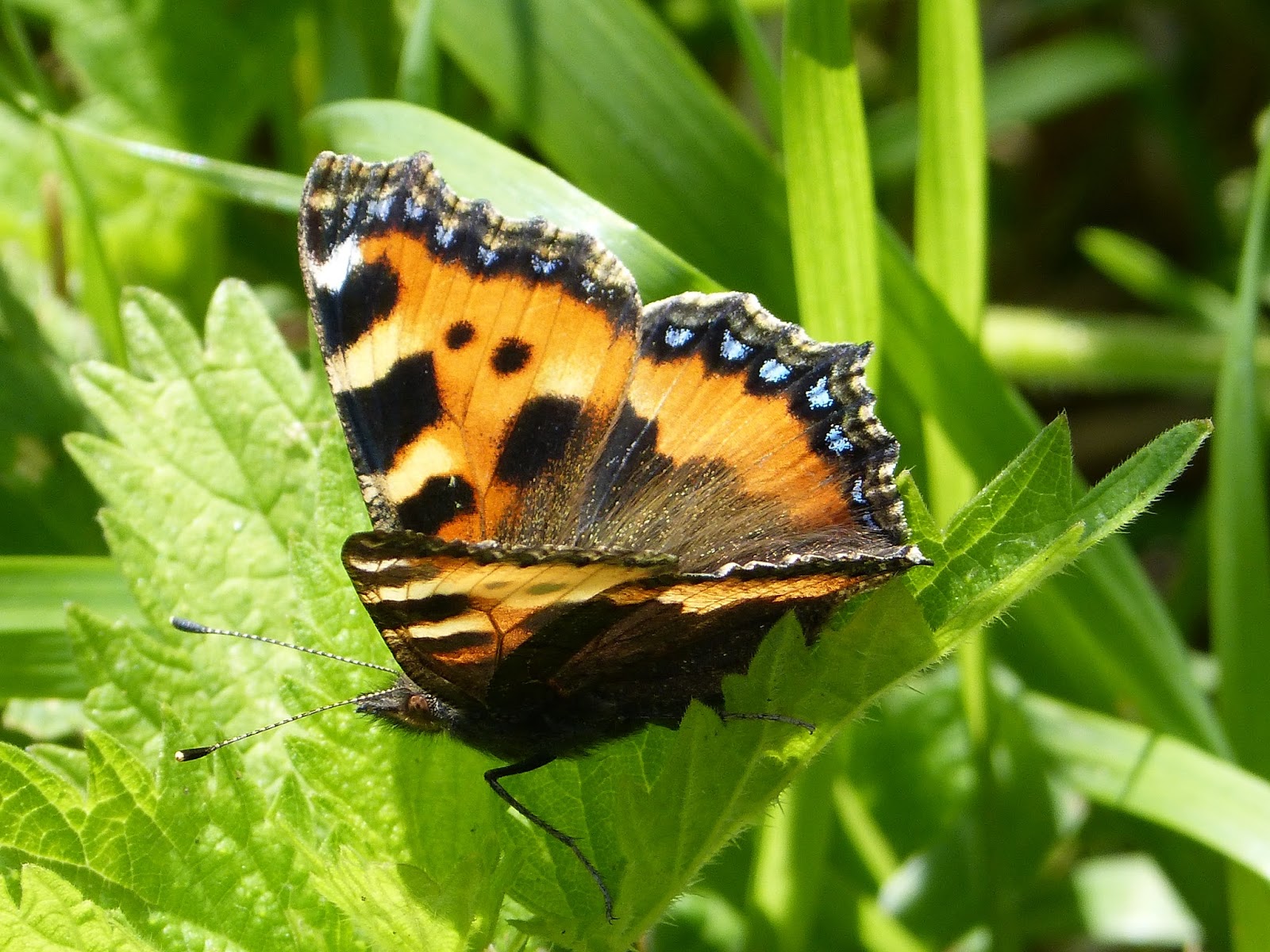
The hedgerows were also humming with bees and butterflies. The striking small tortoiseshells were fluttering in abundance, in the company of speckled woods and meadow browns. We were also lucky to spot the tiny small skipper butterfly along the footpath, moving away from us a few feet at a time. The larger red admiral was also present on bramble flowers in the shadier parts of our walk. None would pose with wings open, presumably they were already at optimum temperature (and may have been preventing overheating?).

When we returned to the river, we spotted an Emperor dragonfly patrolling its patch and a perched female banded demoiselle.


Sunday, June 28, 2015

School moths

As word of my blog spread around the school where I work, more and more people bring me insects to identify, call me to look at things they've found, bring in things for my nature table or occasionally ask my advice about various wildlife dilemmas.

The latest intrigue has been two incredibly furry moths on the staff room windows, which my colleague and I think are pale tussocks. Unfortunately, I only had my phone with me for photographs and, as it was on a window, some have my reflection in too!

A student has also brought me a moth caterpillar recently, which we have kept and fed and is now a cocoon... We're looking forward to finding out what it might turn into.


Saturday, June 13, 2015

RSPB Minsmere #Springwatch

I haven't been to Minsmere in a long time, but since Springwatch was on, some friends and I decided to make the trip last weekend. It was so busy; great to see so many people out enjoying wildlife! Before I get started with what we saw where, here's a species list from my nature journal:


Our first sightings of the day were the many sand martins gliding to and fro from the sand bank where their young were snuggled in their nest holes. I lost count as were sitting in the cafe, fueling up before our long afternoon. After we had made our way round to look properly at this bank, we also noticed a large dragonfly in the pond next to the platform, which I tentatively identified as a four spotted chaser. I love dragonflies, but struggle to identify them, so I was very pleased when I later verified my initial id.


In the first hide we got to, we had wonderful views of young, long legged and large footed avocets patrolling the shore line of the small islands and skimming the surface. We watched the adult avocets aggressively chasing away other birds, even a befuddled barnacle goose who didn't seem to quite work out what was happening. A little egret also performed its stalking and fishing techniques right in front of the viewing window. There were black-tailed godwits a plenty and we heard the occasional explosion of a cetti's warbler around the reserve.


On our walk to the next hide, I was very excited to get views of both male and female bearded tits, despite the strong gusts of wind. They were keeping low, but were still visible from time to time, they were too quick for my camera though. Fantastic to see them, this is the first time I have had proper views of them, and only the second time I have seen them at all (the first was one week earlier at Lakenheath Fen). My next aim will have to be to photograph them in the wild! Also on our walk we came across a shallow stretch of water, where we could see male, female and the fry of stickleback, as well as males fanning their nests. The photo I took through water in bright sunlight isn't great, but hopefully is a token to 'Spineless Si' from Springwatch! On the same stretch of water, I spotted my second Odonata species of the day; a blue-tailed damselfly.

On another walk between hides, we also heard the calls of a young great-spotted woodpecker and were lucky enough to spot it with its head poking out of its tree hole nest. We also saw the adult visit and feed a couple of times too. Another bird that decided to be photogenic was a male chaffinch who appeared in very good condition and voice on a low branch above us.

After these two encounters, we acquainted ourselves with a reptilian, a tagged adder, protected by fencing and well camouflaged until it decided to move to a (perhaps) warmer spot.


At our final hide of the day, we saw more waders and a graceful mute swan with her four young cygnets. A very peaceful end to a packed afternoon of great wildlife. Thank you RSPB Minsmere, we'll certainly be back again!


Tuesday, June 9, 2015

RSPB Lakenheath Fen

I've finally made it to this reserve, I'd heard so much about it, but had just never got around to going. I am so very glad we made the effort, we saw at least 27 different bird species, including some rather impressive ones (in my mind anyway).


Our jaunt around the reserve began with the sighting of a white throat, singing loudly and making himself obvious (for a welcome change). A beautiful little bird, I often hear but do not see these, and usually have even less of a chance to snap a photo of them! This one posed nicely.


Reaching our first viewpoint (New Fen), we were lucky enough to almost immediately spot a large oddly shaped bird flying low over the reeds, then landing quite suddenly. My first confirmed sighting of a bittern! Whilst we sat and watched, we were treated to views of a marsh harrier gliding over the pool and surrounding reed beds. This beautiful bird seemed to be looking for prey, but apparently wasn't finding anything worth trying for. The calls of house martins and swifts above were glorious and the insects had been brought low enough that the Hirundines and swifts swooped low enough that we could see the white rumps of the martins with ease and could marvel at their aerial agility.


We also spotted a lovely freshly emerged damselfly, which I am unable to identify. On our way to the next viewpoint, we spotted more white throats calling, displaying and often fighting off rivals amongst the reeds.

A family of coots (somebody else had thrown bread in before we arrived) awaited us at the Mere hide. There was little else to see here, except, most excitingly, a tantalising glimpse of a male bearded tit zipping across the pool and landing deeply in reeds so as not to be glimpsed again. This was one of my wildlife aims for the year - to see a wild bearded tit! The next mission will be to photograph one.

Next, we paid a visit to 'Joist Fen Viewpoint'. Here, I spotted three cuckoos calling and fighting; a real turn up for the books having not heard a single one so far this year. Another piece of excitement here was hearing the little bittern calling from deep within a reedbed. We did not wait to see it - some photographers had been waiting for hours to see the bird making that interesting booming / barking sound.


Walking back along the River Little Ouse, we spotted another first for me - a hobby. It was gliding and swooping, on the hunt for dragonflies. We even saw it catch and eat a dragonfly on the wing. Fantastic bird!

We had a lovely day at this reserve - I hope to visit again soon!

Monday, June 8, 2015

Fledglings on the feeders

I am a few blogs behind at the moment, but just wanted to share our recent fledgling invasion with these pictures of our green finches and starlings. It's interesting to watch the starlings, it almost seems as if they establish a 'pecking order' as soon as they land and begin squabbling over food. They've also got significantly more confident in the couple of weeks since I took these shots and are now fighting off the adults to get their share!


Thursday, May 28, 2015

Pensthorpe and Baby Birds

What better way to start off half term than with a trip to Pensthorpe? Eighteen wild bird species spotted, my first brimstone butterfly of the year and a multitude of just-hatched and young birds.

Before we even got through the gates of the reserve, we encountered a couple of mallard ducklings, frantically calling and wandering from water to land and back looking for their mother, only the second brood of ducklings I've seen so far this year. As we arrived quite late, we then went straight to the cafe, where, in a corner, there were communal nest boxes for sparrows, of which there were plenty and they were confident too, attempting to steal pieces of my scone from right under my nose!


We started off with a visit to the turtle dove breeding aviary. We both agreed that we could listen to the purring of these tortoiseshell and increasingly rare beauties. The bearded reedlings were also on good form, snuggling together amongst the reeds. There were also young corncrake and very tiny avocet hatchlings.


On entering the reserve proper, we, as we always do, fed their captive collection of wildfowl, then entered wilder territory. But, by their white-naped crane enclosure (who are still incubating a single egg, if you read my blog in April), there were a family of coots, including five youngsters, not long hatched from their size and comparative fuzziness! All were imitating the adult coots by preening and washing in the shallow water.


In the glorious sunshine, we walked under the archway of wisteria, emerging by one of the many lakes on the reserve. Suddenly, we heard a mechanical churring and singing from a waterside tree; a warbler which I could not differentiate by sound alone (I am still learning these magnificent songsters, but am struggling to tell them apart by both song and sight). I craned around different bushes, scanning them with both binoculars and camera to try to spot the bird. Eventually, I came across a reed bunting, but he was not the source of the melody. We had to continue on, but by chance, I stumbled across two of my marks, they turned out to be two reed warblers very low in the reeds by the pathway.

We continued on to head into the woodland and the bird hides, but before we could, we had to walk through gaggles of Canada, barnacle and greylag geese, five of which were greylag goslings. All were relaxing, sprawled out in the shade, apart from mother goose, who stayed very alert, keeping a wary eye on us as we passed. I knelt to photograph them and one gosling stood up and wandered towards us. Watching it walk and peck at the ground as it waddled along, with its tiny wings and oversized feet, really made me realise their similarity to their prehistoric ancestors, reaching back to archeopteryx and beyond.


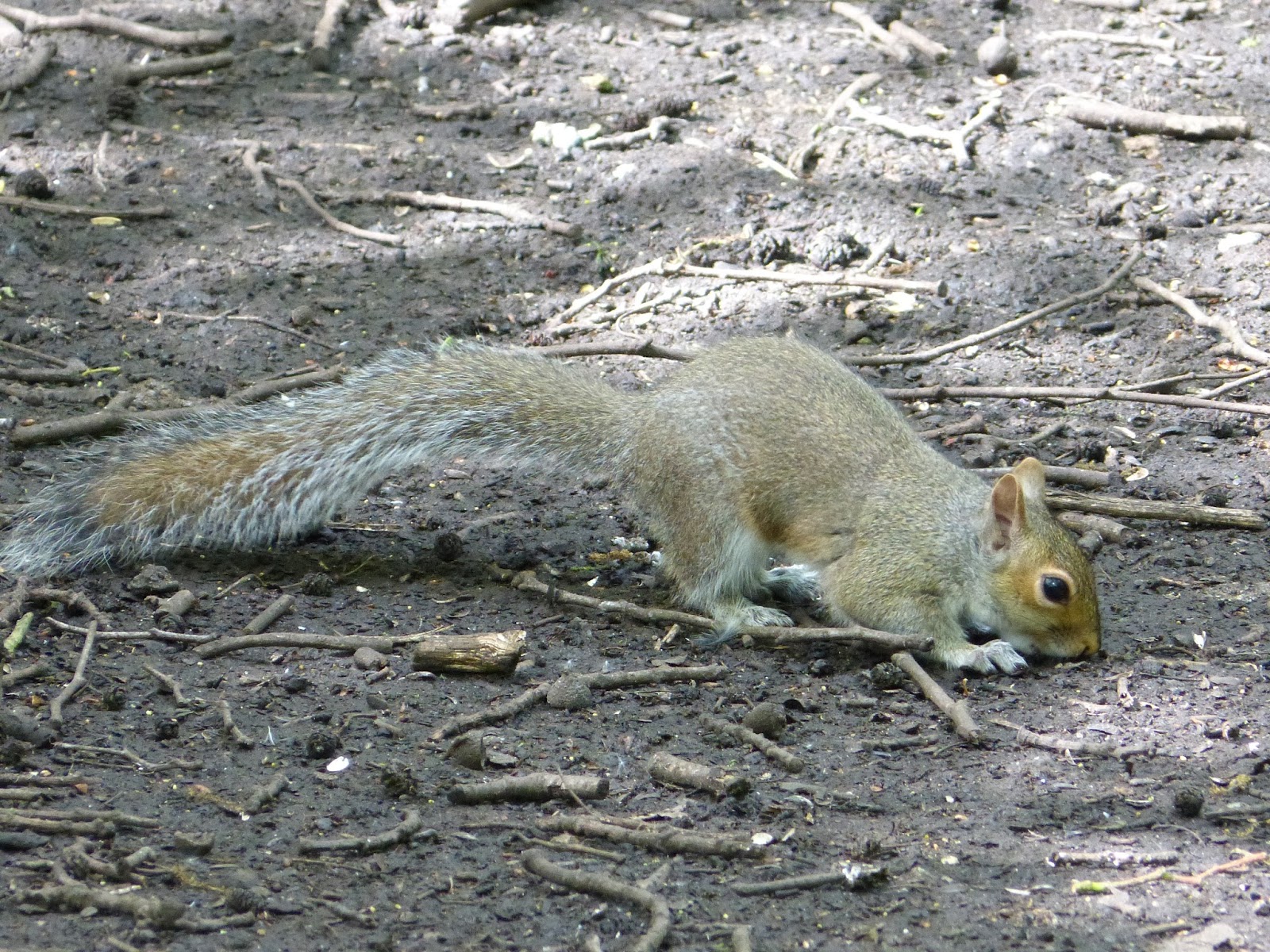
There was little to be seen from the woodland bird hide, but a stock dove, a great spotted woodpecker and a grey squirrel graced us with their presence. After a five minute stint in the hide, we continued on rather briskly, realising that we didn't have long before we needed to depart the reserve and head home. But, on our return walk, we were rewarded with great views of a great crested grebe preening and apparently 'dancing' next to the wave garden. A fantastic end to our visit!



Monday, May 25, 2015

Butterfly rearing and releasing

For the second year, I decided to buy in some painted lady butterfly caterpillars to rear in my lab on my nature table at work. Last year, the pupils loved watching them develop and emerge as butterflies, so I thought I would try it again. Little did I know that this year, they would get 'lost' in the post, arriving a week late and looking like monsters already! We did still watch them grow and develop for a week before they became chrysalises though. When they reach this stage, they have to be transferred to their 'hatching habitat' to stop their wings getting trapped. I had forgotten how much these seemingly motionless hanging brown blobs could wriggle when threatened!