Saturday, March 25, 2017

Going Old School - Osprey Drawings

When I was a kid, I used to like to draw.  I would draw cars, trees, boats, whatever.

Fast forward and now I like to take photos.  A ton of photos.  I usually take more than 100,000 photos a year.  A typical day could be 500-2000 images depending on how many places and cool things and action I encounter.

A month or so ago I bought a couple of sketch books and some pencils, erasers, etc.

Thursday I sat down with a pad and pencil and stared at it for a while.  Then I drew a box with a vertical line through it.  And I scratched my head so to speak...  What is that and why did I draw it?  I didn't know.  I still don't know, but it was a starting point.  I figured out that was NOT what I wanted to draw.  Usually my doodles are boxes, three dimensional distractions that are a waste of time but accomplish the goal.

Then from somewhere the idea of drawing a bird came to me.  I decided to try to draw an osprey, and drew about 8 that first night, each roughly a quarter of the page I had to work with. Here are 3 from the first night.


Then on the second night I used most of a page and drew this single portrait.  It's got some light and shadow...


Tonight (3/25/2017) I drew another osprey portrait but I didn't like the way it came out.  It was too dark and there some issues with the proportions being a little bit askew.

So I drew a second image and here's what I came up with, it is from an image I took today of an osprey eating a fish.  All these drawings are based on photographs I took at some point.  I put the image up on my iPad and then drew...


Tonight's second drawing (above) is the first that has the tail and the repeating patterns in the feathers, and the first with talons.  I drew it quickly and probably because I had done another image and given up on it, I was fast to call it done.  Looking at it more I could work on the eye more and the left leg might need some adjusting.  But part of this exercise is to go quick and make drawings and learn and move on.

I'm still playing with a few modes of doing the drawings.  2 days ago I started with the eyes and then added around that slowly.  Today I tried starting with the tree branch and then added the eye and then more of an outline of the bird.  In the future I want to try to do more of an outline of the entire bird/subject and then as I go fill in the details.  That should help me get the scale and proportions better.  But I also know from some past drawings that starting with small details and adding slowly to that can have a surprisingly good result because it is details added to details and the scale is considered for each small area vs. trying to get the scale correct all up front...

Hope you like the drawings, I had fun making them and plan to make more.

-Jon

Tuesday, March 14, 2017

2017 Osprey


When the osprey leave at the end of the summer I always anticipate their return 6 months later.  Usually that means early March, some osprey are back and I look forward to seeing my first ones of the year.

First osprey (1/2 of pair) of the year, from March 2017:
 Feasting Osprey


Possibly my 2 favorite osprey photos of 2016, from out at St. Michaels on the Maryland Eastern Shore.

Male delivering a fish to a full nest:

July Osprey [1]


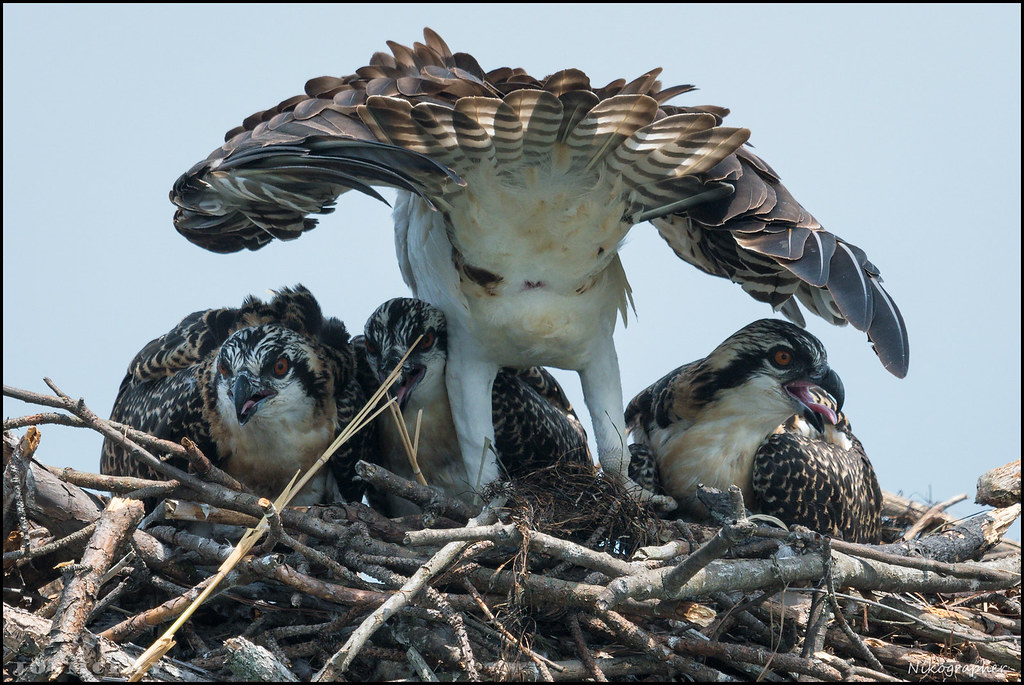
I don't previsualize photos very often, but this is one I planned for and hoped to capture.   The only thing I went to shoot on this and one other day were 2 specific osprey nests, which each had 3 chicks.

Female shading her 3 chicks on a near 100 degree day:

Happy New Year

-Jon

Monday, March 13, 2017

6. Strumpshaw Fen

A bright day with the hazy Sun peering through stratus cloud; blackthorn blossoms sweetened the air and heightened the senses, spring seems to have begun. Bees delicately visited the pink-white flowers and the song of small birds came from every tree.

We made a bee-line for tower hide, spotting greylag and Canada geese lining up along the banks of the lagoons on the way. Cetti’s warblers exploded in song, buried somewhere deep along the edges of the path. Tufted duck, pochard, mute swans and great crested grebes dabbled and drifted on the pools of water. Tower hide boasted mixed rafts of shoveler and teal, with the occasional shelduck and gadwall. A heron hunted in the distant pools. A majestic marsh harrier perched in a scrubby tree, surveying the view over the reedbed. Taking to the sky on broad, fingered wings, looking straight into the hide, or so it seemed, then skimming the roof and away.

Rather than risk the sticky mud that can frequent the trail at this time of year, we turned back and made our way towards fen hide. At first, little moved, except a dabbling coot. Then, thanks to some other visitors who pointed out the ‘ping’ call coming from the reeds, my first ever photograph of a wild bearded tit – a pair presented themselves to the onlookers from the hide, the male showing off his beautiful markings from the tip of a reed momentarily before flitting away and beckoning his mate to follow. 


Wednesday, March 8, 2017

Tell me about Your struggle


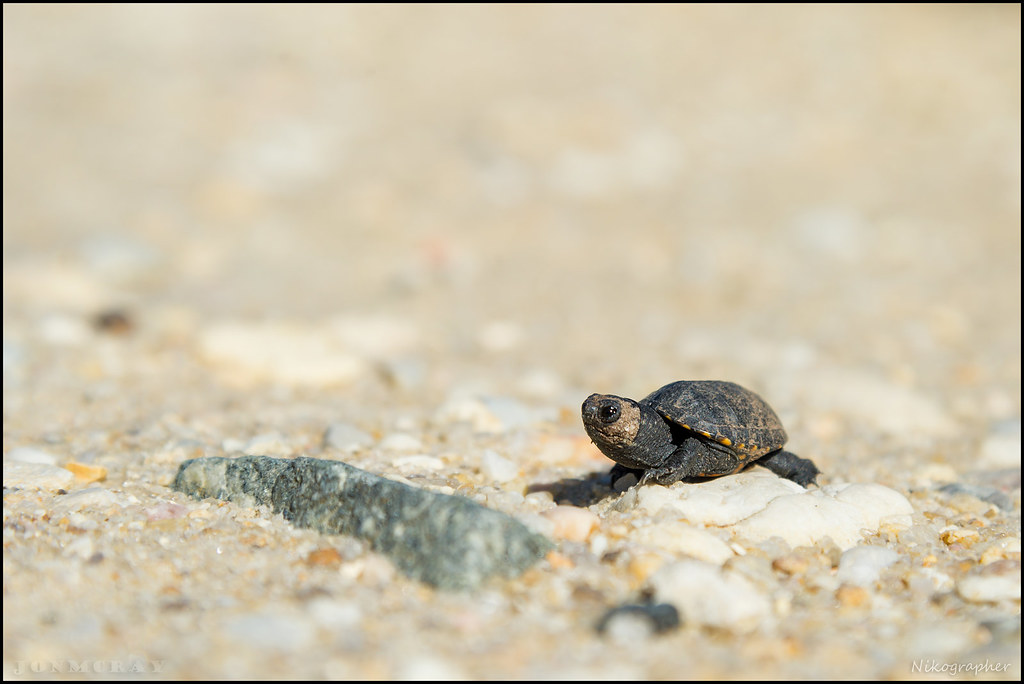
This tiny turtle was as small as a quarter.  I spotted him along the trail at  The Nature Conservancy's Meadows in Cape May NJ.

D4 w/ 24-120mm. 1/1250 f/7.1 ISO 220 (manual exposure w/ auto-ISO)
tell me about Your struggle


Seeing such a small version of a turtle that is hoping to grow so large and has a huge struggle in front of them was something I found interesting and something to reflect on and gain perspective from.

In day to day life we think we may have it hard and things aren't going our way, and it is such a struggle.  But when compared to this little guy we have it easy!  He has it so hard I could have easily not spotted him and stepped on him and that's it.  Some giant shoe ends his entire life.  Over.

And yet we worry and complain and feel like it is so hard our lives.

Monday, February 20, 2017

5. Lakenheath Fen

Reed bunting
A pale sky, blanket cloud filtering the Sun’s light as it tried to break through. The songs of robins, blue tits and great tits serenaded visitors as they tumbled out of their cars and into the reserve. Chatting to one of the volunteers in the visitors centre, we were told that bearded tits were showing well around the reserve, as were marsh harriers. With optimism, we set out to see what we could find. The staccato shouts of wrens coming from the sides of the visitor trails guided our way towards New Fen Viewpoint. A serenely calm pool awaited us, the surface disturbed only by two coots dabbling and diving, a few mallards and gadwalls and a great crested grebe proudly showing its red mohican above a white cheek. A trail through the reed bed, adjacent to the main path revealed more wrens. Cetti’s warblers began their appealing song whilst remaining deep within the vegetation. The whistling calls of a coil of wigeon passed overhead. Canada geese and mute swans graced the neighbouring pools and a great spotted woodpecker could be heard drumming in the surrounding trees.

Stonchat (m)
Despite listening keenly for bearded tits on our way to Mere hide, we were not in luck. The pool at the hide was just as calm as the previous viewpoint, this time with a coot, a moorhen and four mallards disturbing the placid water. A pair of wrens burst from the reeds, chasing each other along a corridor through the vegetation. Never before today had I really believed that the wren is the UK’s most numerous breeding bird. Almost as if they were respecting the silence, a flock of lapwings flew over the hide as we made our exit, their chunky square wings silhouetted against the brightening sky. At the hide and on the trail leading away were empty platforms offering grit to the invisible bearded tits.

On the trail to joist fen viewpoint, instead of bearded tits, we found a reed bunting picking grit from the path, flying only a few metres ahead each time we approached before eventually veering off into the safety of reeds and trees.

Great white egret
A footpath parallel to the reserve boundary, following the River Little Ouse gave an elevated view over the reserve and surrounding countryside. A pair of stonechats flitted between tall grasses and reed heads, almost bouncing up and down as they transferred from one stem to another. A kestrel hung in the sky, hovering, and then, missing its meal, rested in the woodland trees. The lakes beyond the river, looking away from the reserve boasted jewels of colour: shoveler, teal, lapwings, little egrets. The largest was the tall, yellow-billed great white egret, towering above the little egrets, despite being further away. Broken oyster shells littered the sides of the path. Back in the reserve, a whole gang of long tailed tits decorated the heads of tall reed stems and a single leafless tree amidst the rustling golden stalks. They jingled through like early blossoms drifting from the tree.


Re-entering the reserve trail, blue tits and great tits littered the feeders by the visitor’s centre and a kestrel perched on a tree in the car park. A pair of roe deer bade us farewell at the reserve entrance.


Wednesday, February 15, 2017

4. Pensthorpe Natural Park


A brisk Valentine ’s Day walk in the dappled afternoon sunshine around Pensthorpe Natural Park gave us some unexpected sightings. Meandering through the wave garden, the bright white stars of snowdrops illuminating the leaf litter and bark chippings, heralding the beginning of early spring. A little egret similarly lighting up the opposite bank as we passed, balancing the great crested grebe on water, on our way to the wader scrape hides. Here, an oystercatcher pulled worms mercilessly from the bank, whilst rafts of teal dabbled and dived. A small coil of wigeon pulled at the grasses and a desert of lapwings pee-witted to each other, standing ankle deep in the water. A smattering of other ducks; shelduck, mallard and shoveler, brightened the scene. We crossed the River Wensum, startling a moorhen and a pair of teal, making our way up towards the wildflower meadow and woodland. Across the meadow, we saw our first bird of prey: a male kestrel quartering and alighting in a slender tree. A trio of redpoll landed unwittingly in a tree nearby.

Delving into the woodland, we were met by the evening songs of birds; blue tit, great tit, finches and others, alongside the disappearing white rump of a roe deer. The woodland hide had some unusual invaders amongst its usual visitors of tits and finches. Two male mandarin ducks waited below the bird feeders for seeds to drop. A muntjac deer joined the fray briefly before blending back into the surrounding trees. Leaving the hide, we were met by several roe deer hiding behind low branches, and a young deer, less shy than the others, eyeballing us from the safety of the trees. A buzzard mewed overhead.


Making our way back to the visitors centre, tufted ducks showed off their contrasting colours on the lake and were joined by a goosander, it’s streamlined shape standing out against the stockier forms of the ducks. A quartet of displaying oystercatchers heralded our way out of the park.


Sunday, February 5, 2017

3. Marston Marsh

Walking along the railway line near Keswick Mill, the air was filled with the plaintive song of the robin. In every direction, in every tree, there seemed to be another red breasted songster, advertising its presence to its competitors. The odd black bird chimed in, not wanting to be overlooked. The more we walked, getting further from the golf course and closer to the marsh and the surrounding stands of trees, the more variety in bird song we heard. A green finch calling its ‘tzveeee’ song from the other side of the railway line, blue tits chattering and seemingly shouting at us and each other, and long tailed tits ‘see-see-seeing’ companionably. Their stocky bodies and long tails stark against the bare twigs of the trees, making it very obvious where the old name of ‘barrel bird’ came from.


Once we were out on the open marsh and field, we strolled along the ‘path’ clinging closely to the River Yare. A little egret perched, preening its long white feathers, framed by the branches of the tree on which it sat, enjoying the sun as it broke through the cloud. The golden rays of winter sunlight brought the colours back to the landscape, picking out the green of the grasses, the gold of the reeds, the fawn of the trees and the yellow of the lichen encrusting them. There also seemed to be an audible difference in the level of birdsong. A song thrush began its beautifully repetitive song and a green woodpecker yaffled across the marsh, but stayed well hidden. Jay’s showed off their blue and orange flashes, reflecting strongly those wavelengths of the sun’s light. A collection of quiet birds, which may have been tree sparrows (they moved too quickly to get a clear look, but their heads looked wrong for house sparrows) and a charm of goldfinches heralded our way out of the reserve and back in Eaton. However, a parting gift was a crowd of redwings foraging in the grounds of the scout activity centre. Sometimes, you find good sightings in unexpected places!